What Makes It the Highest Restaurant
Being the world’s highest restaurant isn’t just a marketing headline, it’s a design challenge and an opportunity. At.mosphere leverages its altitude not just as a feature, but as a core design element. Unlike ground-level luxury venues, where interiors dominate the experience, here the skyline becomes part of the architecture.
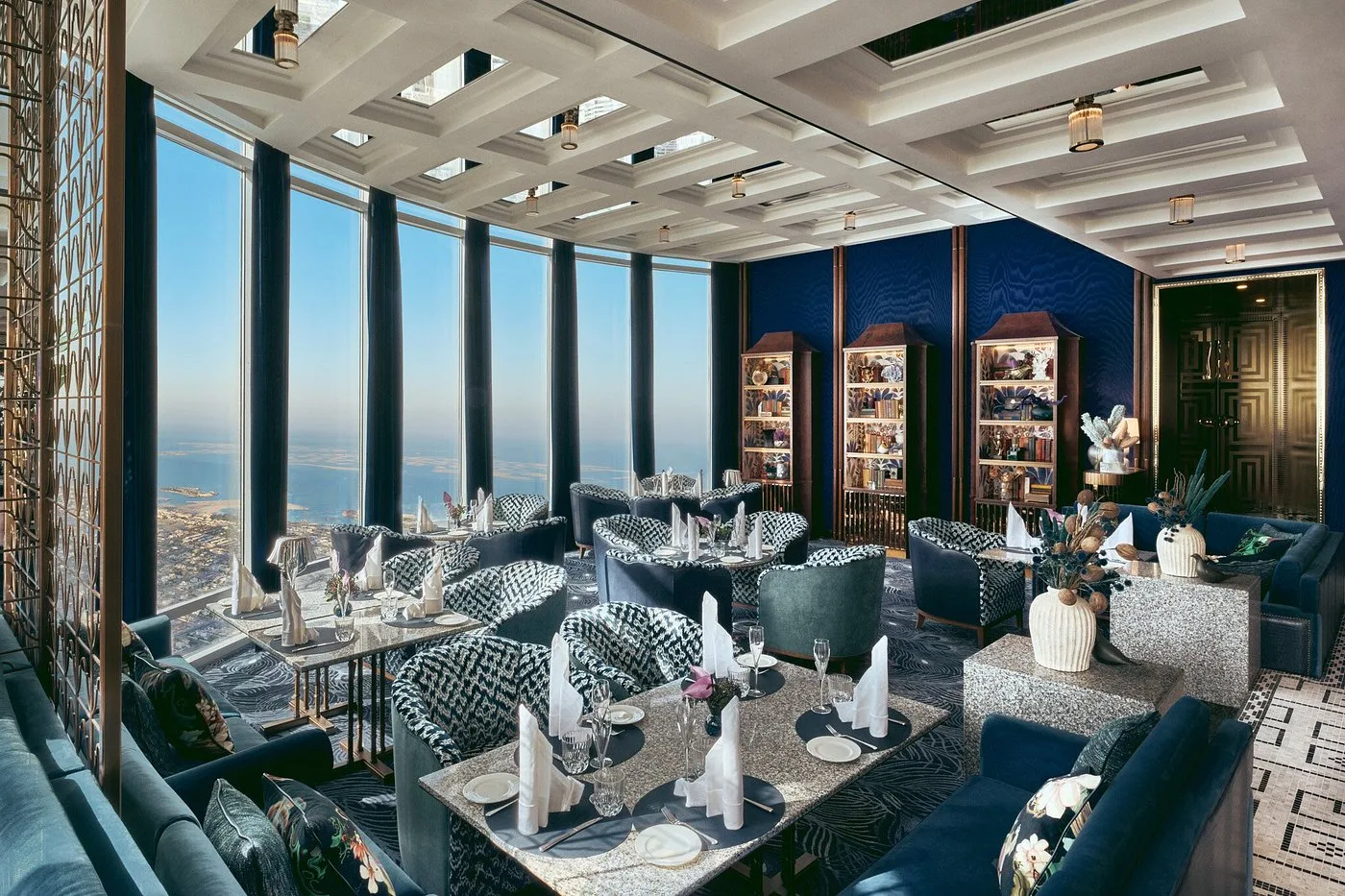
This changes everything. The interior design isn’t trying to compete with the view, it’s framing it. Think of it like a luxury watch display, the design doesn’t overshadow the watch, it enhances it. That’s exactly what happens here. Every seat, every light, every material choice is carefully considered to ensure that the outside world becomes an extension of the interior space.
The Vision Behind the Interior Design
Design Philosophy
The design philosophy behind At.mosphere revolves around one central idea: understated luxury. Instead of going over the top with flashy elements, the designers opted for a more refined, almost quiet elegance. This approach allows the space to feel sophisticated without being overwhelming.
There’s a certain confidence in restraint. You won’t find loud colors or excessive ornamentation here. Instead, the focus is on balance, proportion, and harmony. The idea is simple but powerful, create a space where every detail feels intentional, and nothing feels forced.
Luxury Meets Elevation
Now imagine combining that philosophy with the challenge of vertical space. At this height, even the smallest design decisions carry more weight. The interiors had to reflect the prestige of being inside the Burj Khalifa while still feeling comfortable enough for guests to relax and enjoy their meals.
The result is a seamless blend of luxury and elevation. Materials feel richer, lighting feels warmer, and spaces feel more curated. It’s not just about being high up, it’s about making that height feel like an advantage rather than a limitation.
Spatial Layout and Zoning
Lounge vs Dining Areas
One of the smartest design decisions in At.mosphere is how the space is divided. Instead of a single open-plan layout, the restaurant is segmented into distinct zones, primarily the lounge and the dining area. Each serves a different purpose and offers a slightly different experience.
The lounge is more relaxed, almost like a luxury living room in the sky. It invites guests to unwind, have a drink, and take in the view. On the other hand, the dining area is more structured and formal, designed for a full culinary experience. This separation ensures that the energy of the space remains balanced, no matter how busy it gets.
Flow and Guest Experience
Movement within the restaurant feels natural and intuitive. That’s not by accident. The layout is carefully designed to guide guests through a journey, from arrival to seating to departure. There’s a subtle choreography at play here.
You’re not just walking through a restaurant, you’re being led through an experience. Each transition feels smooth, each space feels connected, and nothing feels abrupt. This kind of spatial storytelling is what separates good design from great design.
Materials and Finishes
Premium Materials Used
Luxury is often defined by materials, and At.mosphere doesn’t disappoint. From polished marble floors to rich wood veneers and metallic accents, every surface feels premium. These materials are not just chosen for their aesthetic appeal, but also for how they interact with light and space.
The use of reflective surfaces, for example, helps amplify natural light during the day and artificial lighting at night. This creates a dynamic environment that changes throughout the day, keeping the space visually engaging.
Texture and Contrast
What really elevates the design is the interplay of textures. Smooth marble meets soft upholstery, glossy finishes contrast with matte surfaces, and metallic details add just the right amount of shine. This layering creates depth and prevents the space from feeling flat or monotonous.
It’s a bit like composing music. You need highs, lows, and everything in between to create something memorable. The same principle applies here, and the designers have executed it beautifully.
Lighting Design Strategy
Ambient Lighting
Lighting in At.mosphere is all about mood. The ambient lighting is warm and inviting, creating a sense of comfort despite the dramatic height. It wraps the space in a soft glow, making it feel intimate and cozy.
This is especially important during evening hours when the city lights take over. The interior lighting complements the exterior view, rather than competing with it.
Accent and Mood Lighting
Accent lighting is used strategically to highlight key elements, whether it’s a piece of furniture, a textured wall, or a dining table. This adds layers to the visual experience and draws attention to specific details.
The result is a space that feels alive, constantly shifting in mood and atmosphere depending on the time of day and the angle of light.
Floor-to-Ceiling Views as a Design Element
Integration with Interiors
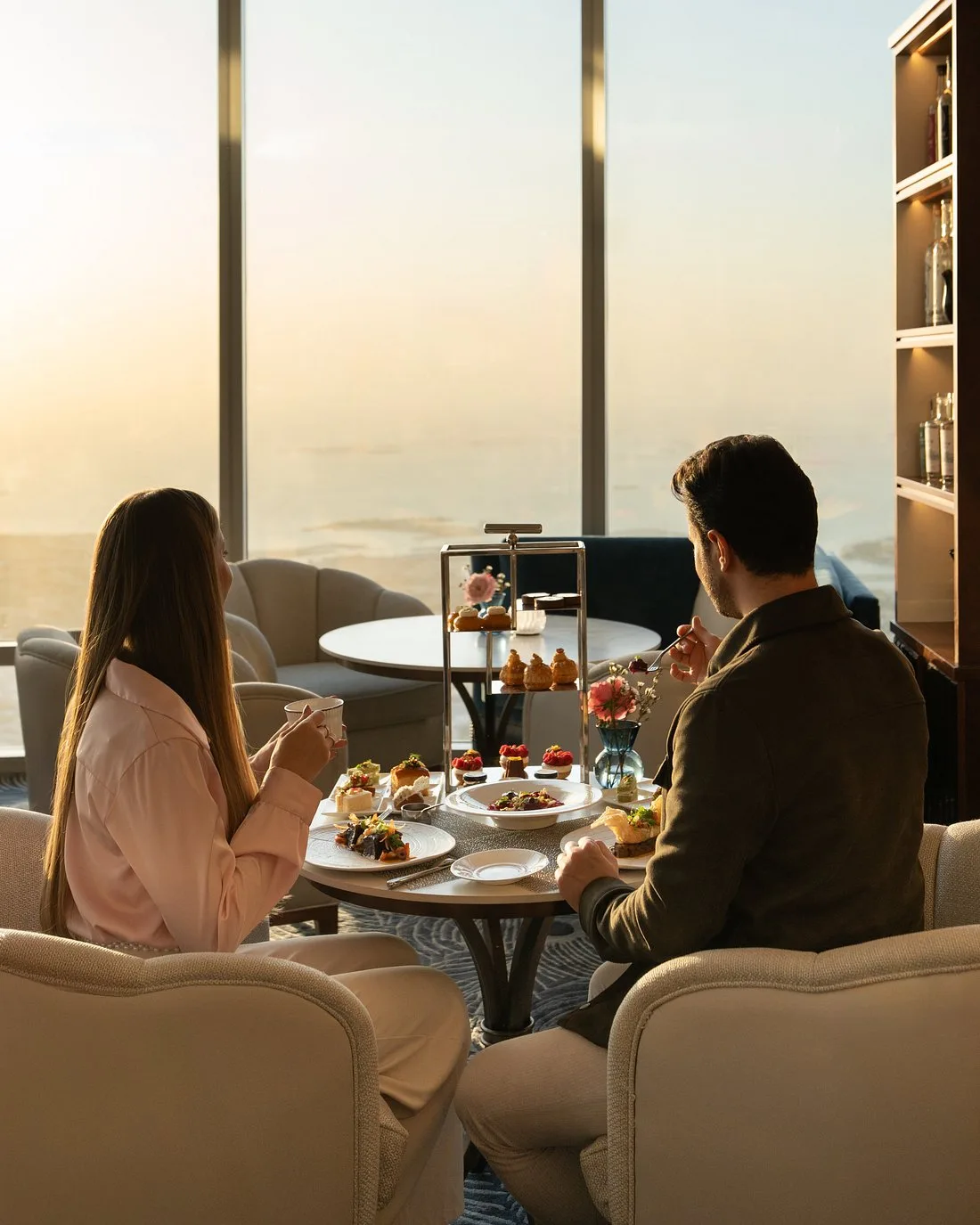
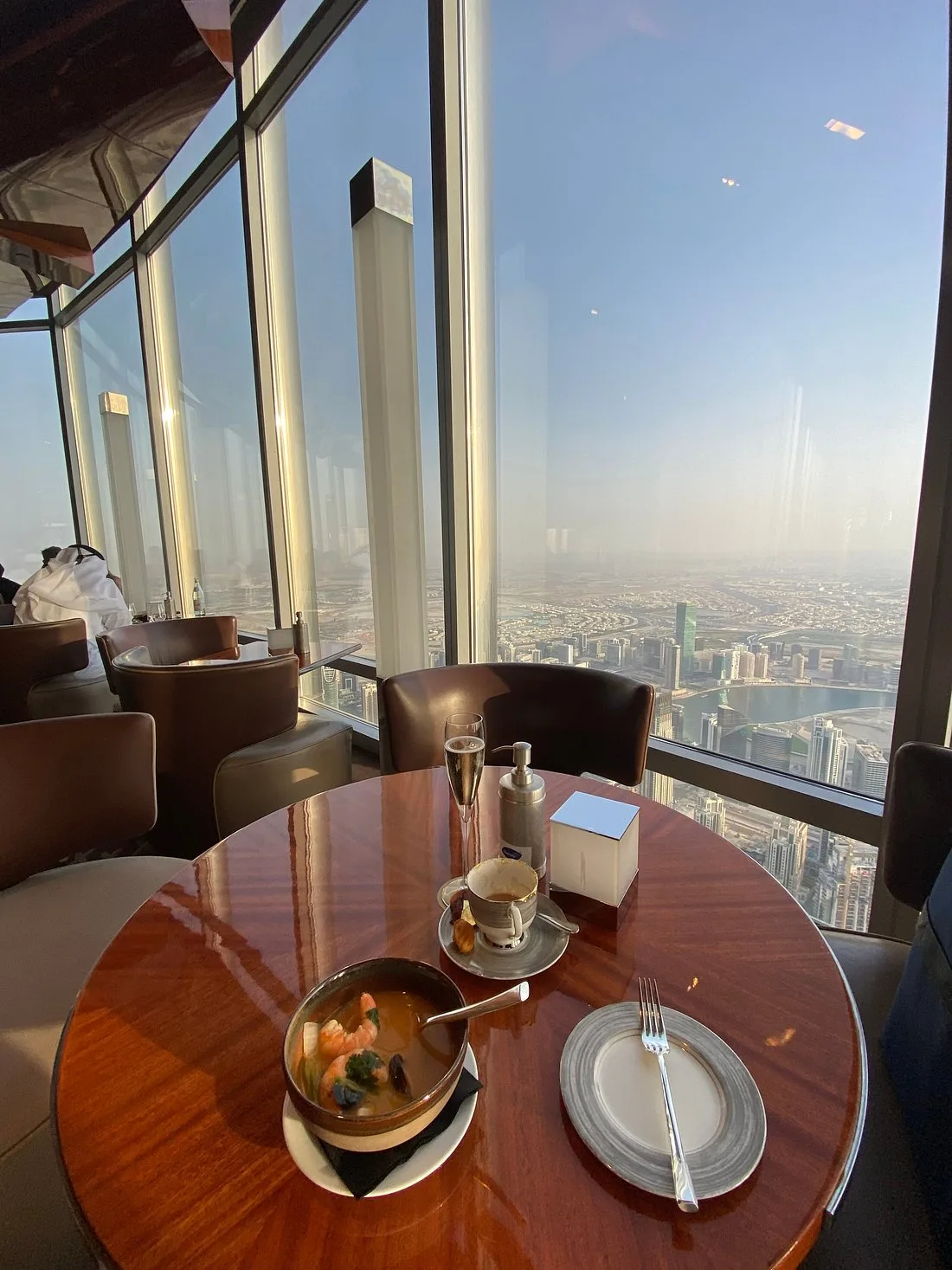
The views from At.mosphere are not just a backdrop, they’re a core part of the design. Floor-to-ceiling windows are treated almost like living artworks, constantly changing with the time of day.
The interiors are intentionally designed to stay neutral and elegant, allowing the skyline to take center stage. It’s a smart move. Why compete with one of the best views in the world when you can frame it instead?
Day vs Night Experience
During the day, the space feels bright and expansive, with natural light flooding in. At night, it transforms into something entirely different, a glowing, almost cinematic environment with the city lights stretching endlessly below.
This duality adds another layer of depth to the design, making every visit feel unique.
Comparison with Other Luxury Restaurants
| Feature |
At.mosphere |
Typical Luxury Restaurant |
| Location |
122nd floor, Burj Khalifa |
Ground or mid-level |
| View Integration |
Core design element |
Secondary feature |
| Lighting Strategy |
Dynamic and layered |
Standard ambient |
| Experience |
Immersive, vertical |
Static |
| Design Philosophy |
Understated luxury |
Often decorative |