Home Spa & Wellness Room Design Ideas
Insights and Ideas
June 29, 2026

Jumeirah Bay Island is not just another luxury neighbourhood in Dubai, and that is exactly why mansion interiors here need a different level of thinking. This is the kind of address where the architecture, location, waterfront views, privacy, and lifestyle all work together before the interior designer even steps inside.
A home here cannot look like a generic luxury villa with marble floors, oversized chandeliers, and expensive furniture placed for the sake of drama. It needs to feel intentional, calm, rare, and deeply personal, because the people buying or building on Jumeirah Bay Island are not looking for loud luxury, they are looking for a private world that reflects taste, status, and restraint. When a mansion sits on one of Dubai’s most exclusive waterfront addresses, every design decision has to answer one question: does this add value to the way the home feels, functions, and lives?
The island’s identity is built around privacy, water, skyline views, and an atmosphere that feels removed from the city while still being connected to it. That balance is what makes Jumeirah Bay Island mansion interior design so interesting. The interiors must respond to the sea, the light, the horizon, and the lifestyle of owners who may split their time between Dubai, London, Riyadh, Monaco, New York, or Singapore. These are homes for people who understand global luxury, so the design cannot rely on predictable finishes or showroom-style decoration. It has to feel curated, almost like a private resort mixed with a collector’s residence, where every room has a reason to exist, and every material feels like it belongs.


The first thing to understand about Jumeirah Bay Island is that the setting does half the storytelling. With waterfront plots, views across the Arabian Gulf, proximity to the Bvlgari Resort, and a sense of controlled privacy, the island naturally demands interiors that are quieter, more architectural, and more refined than typical luxury villa design. In many Dubai mansions, designers are asked to create visual impact from the inside out. On Jumeirah Bay Island, the approach is almost the opposite. The view, the water, the outdoor terraces, and the natural light already create a powerful emotional setting, so the interior should not compete with them. It should frame them.
This is where luxury mansion interior design in Dubai becomes less about decoration and more about atmosphere. A living room should not simply be “large.” It should feel composed, with seating arranged to capture the horizon, ceiling details that enhance scale without becoming heavy, and materials that soften the brightness of the coastal environment. Double-height spaces need warmth, not just height. Long corridors need rhythm, not just artwork. Floor-to-ceiling glass needs careful control of glare, privacy, and heat, not just dramatic views. The most successful interiors on Jumeirah Bay Island are the ones that feel effortless, even though they are usually the result of hundreds of highly detailed decisions behind the scenes.
The presence of Bvlgari on Jumeirah Bay Island has shaped the design expectations of the entire address. The island is closely associated with Mediterranean elegance, Italian hospitality, yacht-club living, and a polished but relaxed resort sensibility. That does not mean every mansion should copy a hotel or use obvious Italian references. In fact, the better move is to understand the mood behind that influence: warmth, craftsmanship, proportion, material richness, and a lifestyle that moves easily between indoor and outdoor spaces. A Jumeirah Bay mansion should feel refined without becoming stiff, glamorous without becoming theatrical, and luxurious without needing to announce itself in every corner.
This is especially important because the modern ultra-high-net-worth buyer is more sophisticated than before. They are not impressed by expense alone. They notice stone quality, joinery detailing, lighting temperature, acoustic comfort, furniture scale, art placement, scent, privacy, and whether a home feels good at 9 AM as well as during a formal dinner at night. That is why Bvlgari-inspired interiors in Dubai often work best when the inspiration is subtle. Think warm travertine, walnut, bronze, textured fabrics, sculptural lighting, deep terraces, shaded outdoor dining, and a palette that borrows from sand, stone, sea, and soft evening light. The result is not a themed mansion, but a home with the quiet confidence of a five-star private retreat.
A mansion on Jumeirah Bay Island is not designed for ordinary luxury living. It is designed for a layered lifestyle: private family routines, formal entertaining, business hosting, wellness, staff operations, security, art collection, and often multi-generational use. That makes the planning stage more important than the styling stage. Before selecting marble slabs or furniture fabrics, the designer needs to understand how the client lives. Are there large family gatherings? Is the home used seasonally or year-round? Will the owner entertain VIP guests? Is there a private chef? Are there children, elderly parents, live-in staff, security teams, or visiting relatives? These questions shape the real design.
This is where bespoke interior design for Dubai mansions becomes a strategic process. The best homes do not reveal their complexity to guests. They simply feel comfortable, smooth, and beautifully run. Behind that ease, however, there may be separate service routes, hidden storage, acoustic zoning, private lift access, back-of-house kitchens, climate-controlled wardrobes, secure rooms, staff accommodation planning, and discreet technology. In a Jumeirah Bay mansion, the visible design must be beautiful, but the invisible design must be even smarter. When both work together, the home feels natural rather than over-designed.
Privacy is one of the most valuable forms of luxury on Jumeirah Bay Island. A mansion can have breathtaking glass walls and sea views, but if the layout exposes the family’s daily life too easily, the design has failed. Privacy should be layered gently through landscaping, screening, level changes, curtains, smart glass, architectural fins, shaded terraces, and room orientation. The goal is not to close the home off from the water. The goal is to let the owner enjoy openness without feeling watched. That balance is one of the defining skills in waterfront mansion interior design.
Scale is another challenge. Large homes can easily become cold if the designer treats size as a feature by itself. A double-height salon needs zones that bring people together. A vast bedroom needs texture and proportion so it feels restful rather than empty. A dining room for twenty guests needs lighting, acoustics, and table scale that support conversation. Flow matters too, especially in a waterfront home where people naturally move between interior lounges, pool decks, shaded terraces, garden areas, and the beach. The best Jumeirah Bay interiors create a soft rhythm between these spaces, so the home feels like one continuous experience rather than separate rooms stitched together.
In the super-prime segment, interior design should never feel pasted onto the architecture. The most impressive Jumeirah Bay mansions usually have strong architectural bones, including large volumes, clean lines, dramatic glazing, floating staircases, courtyards, skylights, cantilevered terraces, and open sea-facing elevations. The interior design must respect that structure. If the architecture is minimal and sculptural, overly ornate interiors can create tension. If the architecture is warm and resort-like, cold contemporary furniture can feel disconnected. The interior designer’s role is to create continuity between the shell of the building and the emotional life inside it.
Architecture-led design also helps protect long-term value. Trend-heavy interiors can date quickly, especially in ultra-luxury properties where buyers and owners have seen the best homes in the world. A more timeless approach uses proportion, natural materials, custom joinery, tailored lighting, and strong spatial planning as the foundation. Decorative layers can then evolve over time without requiring a full redesign. For Jumeirah Bay Island mansion interiors, this is critical because the property itself is part of a rare market. The interior should enhance that rarity, not reduce it to a fashionable look that feels tired in five years.
The ideal design style for a Jumeirah Bay mansion is best described as warm, architectural, coastal, and deeply bespoke. It should not feel like a hotel lobby, even if the service level is hotel-like. It should not feel like a showroom, even if every piece is expensive. The strongest direction is often a form of warm minimalism, softened with natural textures, art, layered lighting, and furniture that invites real living. Think less “look at how rich this is” and more “this feels impossible to replicate.” That is the sweet spot.
This approach works because the island already carries prestige. The interior does not need to shout. Instead, it can lean into calm materials, strong craftsmanship, and sensory detail. A soft limestone floor, hand-finished plaster wall, bronze-framed shelving system, linen-textured sofa, smoked oak bar, and sculptural travertine dining table can feel more luxurious than a room overloaded with glossy finishes. The mood should be coastal but not beachy, glamorous but not flashy, international but still connected to Dubai. A Jumeirah Bay mansion should feel like it belongs to its owner, not to a trend report.
Warm minimalism is one of the strongest directions for high-end villa interior design in Dubai, especially for waterfront homes. Traditional minimalism can feel too stark in a city with intense sunlight and large-scale architecture. Warm minimalism solves that problem by using clean lines, open space, and visual calm while adding depth through tactile materials. Instead of cold white walls and grey stone everywhere, the palette can include sand, ivory, taupe, clay, warm grey, walnut, bronze, and soft black accents. The result feels modern but still human.
The “resort soul” comes from how the home supports rest, hosting, and movement. Wide sliding doors connect lounges to terraces. Outdoor furniture feels as considered as indoor furniture. Bedrooms have the softness of private suites. Bathrooms become spa-like sanctuaries. Lighting changes throughout the day, from crisp morning brightness to candle-like warmth in the evening. This kind of design does not need too many decorative statements because the feeling of the home becomes the statement. It whispers, which is exactly why it works.
Materials carry the mood of a mansion. In Jumeirah Bay Island homes, natural stone is usually central, but the selection needs to be handled carefully. Marble, travertine, limestone, quartzite, onyx, and textured stone can all work, but they should be chosen for character, durability, and harmony with the architecture. A heavily veined stone can look stunning as a bar backdrop or powder room feature, but if used everywhere, it can overpower the home. A softer stone floor, paired with richer feature slabs in selected areas, often creates a more elegant balance.
Timber is equally important because it brings warmth to large spaces. Walnut, oak, smoked eucalyptus, teak, and custom veneers can soften the hard surfaces usually found in waterfront mansions. Soft metals such as bronze, brushed brass, champagne aluminium, and darkened steel can then add refinement without creating a shiny, over-polished effect. The trick is restraint. A home does not need ten hero materials competing with each other. It needs a controlled palette that repeats in different ways, so the mansion feels unified from the entrance to the private suites.
| Design Element | Best Luxury Direction | Why It Works for Jumeirah Bay Mansions |
|---|---|---|
| Flooring | Limestone, travertine, large-format marble | Creates continuity and calm across large spaces |
| Wall Finishes | Textured plaster, timber panels, stone accents | Adds depth without visual clutter |
| Metals | Bronze, brushed brass, dark steel | Feels refined, warm, and timeless |
| Furniture | Bespoke, low-profile, sculptural pieces | Keeps views open and proportions balanced |
| Lighting | Layered architectural and decorative lighting | Supports mood, privacy, and evening ambience |
| Outdoor Areas | Resort-style terraces, shaded lounges, natural fabrics | Extends luxury living toward the water |
In a mansion of this level, furniture should rarely feel off-the-shelf. Even when international brands are used, the final composition should feel personal and collected. Bespoke furniture allows the designer to respond to the scale of each room, which is especially important in large waterfront homes where standard sofa sizes, dining tables, and consoles can look strangely small. Custom pieces also allow better control over materials, proportions, comfort, and the relationship between furniture and architecture. A curved sofa can follow the line of a sea-facing window. A dining table can be designed around the exact number of guests the family hosts. A bed wall can integrate lighting, storage, and acoustic softness in one gesture.
Collectible pieces bring soul. This could include art, limited-edition lighting, handmade ceramics, sculptural objects, vintage Italian furniture, regional craft, or commissioned works by artists. The key is to avoid turning the mansion into a gallery where nobody feels comfortable sitting down. The best interiors blend collectible value with daily use. A Jumeirah Bay home should have pieces worth talking about, but it should still feel like a place where coffee is served, children walk through, guests stay late, and the owner feels completely at ease.
A mansion is not one design moment. It is a sequence of experiences. The entrance creates arrival. The formal areas create impression. The family living spaces create comfort. The bedrooms create privacy. The wellness areas create restoration. The outdoor spaces create the waterfront lifestyle that makes Jumeirah Bay Island so desirable in the first place. Each area needs its own mood, but the entire home should still feel connected through material language, lighting, proportion, and detailing.
A room-by-room strategy also prevents the common luxury mistake of making every space equally dramatic. If the entrance, living room, dining room, powder room, staircase, kitchen, and master suite are all fighting to be the main feature, the home becomes exhausting. Great mansion interior design needs hierarchy. Some spaces should impress. Some should calm. Some should support service and functionality. Some should disappear into the background. This layered approach is what gives a large home elegance.
The entrance of a Jumeirah Bay mansion should feel cinematic, but not loud. It is the first physical expression of the owner’s taste, so the design needs to communicate confidence quickly. A beautiful stone floor, sculptural staircase, double-height volume, water feature, custom console, or art wall can create an immediate sense of arrival. Lighting should be soft but purposeful, guiding the eye rather than flooding the space. Scent, acoustics, and temperature matter here too, because luxury is not only what people see, it is what they feel the moment they walk in.
The majlis and formal reception spaces need special care in Dubai homes. They are often used for family gatherings, business hosting, Ramadan evenings, Eid visits, and VIP guests. The design should respect regional hospitality while staying aligned with the overall contemporary language of the mansion. This could mean generous seating, subtle privacy, elegant coffee service areas, rich but restrained textiles, and a layout that supports conversation. A formal room should not feel like a museum. It should feel dignified, comfortable, and ready to host.
The main living area is usually the emotional centre of a waterfront mansion. It should be generous, open, and connected to the view, but it must also feel grounded. Large sofas, layered rugs, stone tables, soft curtains, and warm lighting can help reduce the “glass box” effect that sometimes happens in modern seaside homes. The furniture plan should support different types of use, from quiet family mornings to evening gatherings. In a mansion, one huge seating arrangement is rarely enough. Smaller zones within the larger space usually feel more natural.
The dining room and show kitchen need a balance of performance and beauty. Many ultra-luxury homes include both a show kitchen and a back-of-house chef’s kitchen, which allows the visible kitchen to remain elegant while serious cooking happens behind the scenes. The dining space can be more sculptural, with a statement table, custom lighting, and perhaps a wine display or service wall. But again, comfort matters. Guests should be able to sit, speak, and enjoy the evening without feeling like they are part of a staged photoshoot.
Private suites are where the tone should soften. A master bedroom in a Jumeirah Bay mansion does not need to prove anything. It should feel calm, protected, and deeply comfortable. The best direction usually includes layered textures, low-glare lighting, acoustic softness, custom wardrobes, private sitting areas, and a strong connection to either the sea view or a garden terrace. The bed should not simply be placed against the most convenient wall. It should be positioned around privacy, morning light, circulation, and how the owner actually uses the room.
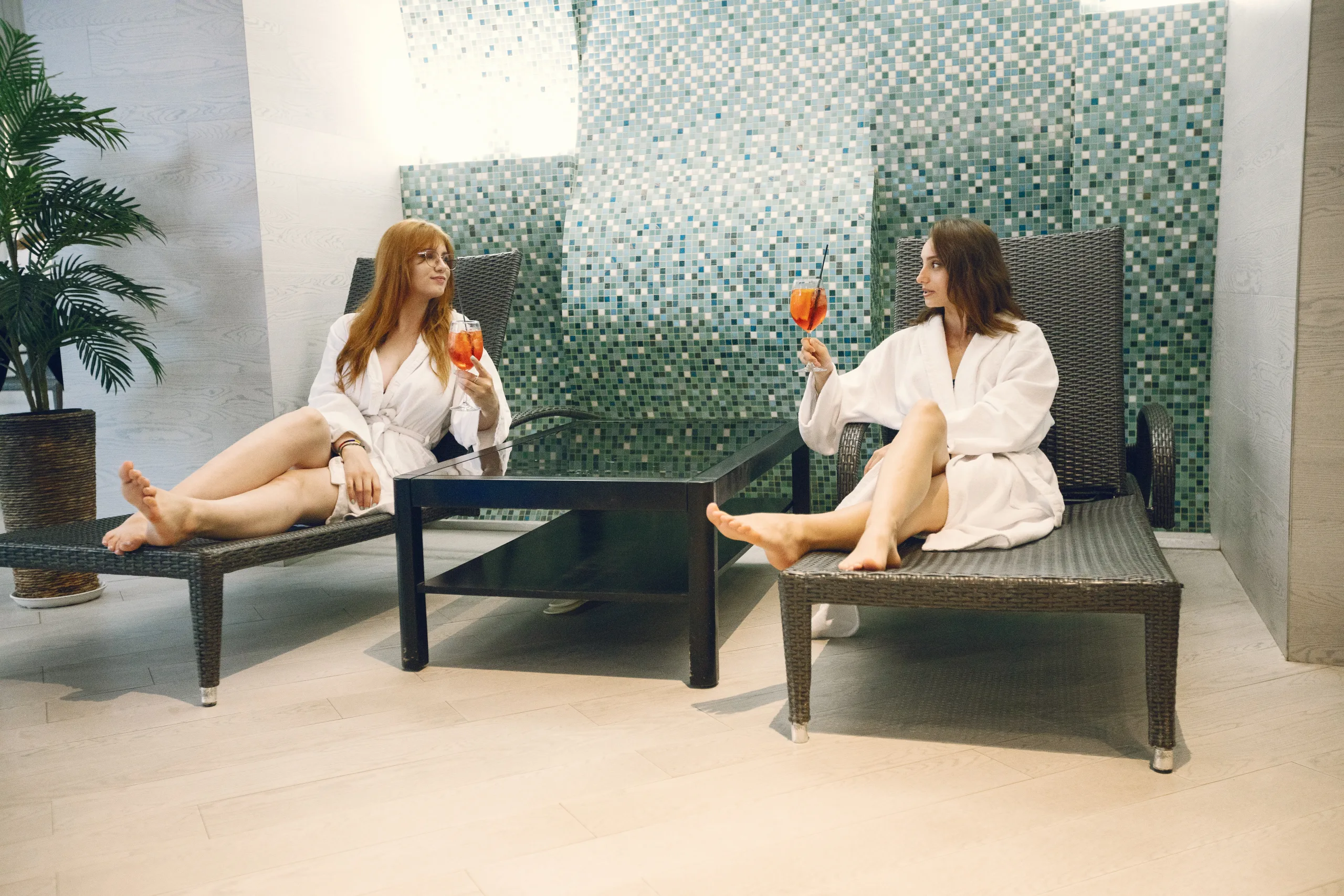
Bathrooms and wellness zones have become major markers of modern luxury. A spa bathroom can include natural stone, steam showers, soaking tubs, private courtyards, warm lighting, and tactile finishes that make the space feel restorative rather than purely functional. Wellness zones may include gyms, yoga rooms, massage suites, saunas, ice baths, meditation rooms, or recovery lounges. This reflects a larger shift in luxury design: homes are no longer just places to live and entertain. They are becoming private environments for health, focus, recovery, and emotional balance.
For Jumeirah Bay Island mansion interior design, the outdoor areas are not secondary. They are part of the main living experience. Pool terraces, shaded lounges, outdoor dining spaces, beach decks, fire features, garden paths, and waterfront seating should feel as thoughtfully designed as the interiors. The materials need to handle sun, salt, humidity, and heavy use, but they should still feel soft and luxurious. Outdoor fabrics, stone, timber-look finishes, pergolas, planting, and lighting all need careful coordination.
The transition between inside and outside is where the magic happens. When doors open fully and the living room flows into the terrace, the furniture, flooring, ceiling lines, and lighting should feel connected. This creates a resort-like ease that suits the island perfectly. Evening lighting is especially important because waterfront homes change character after sunset. Soft landscape lighting, pool reflections, warm wall washes, and discreet path lights can turn the outdoor space into one of the most memorable parts of the home.
The future of luxury mansion design is not only about rare marble and custom furniture. It is also about intelligence, comfort, sustainability, and long-term performance. Owners of super-prime homes expect technology to work smoothly, but they do not want to see messy switches, exposed devices, or complicated control panels everywhere. They also expect their homes to feel comfortable in Dubai’s climate, which means cooling, shading, insulation, ventilation, and energy efficiency are not boring technical topics. They are part of the luxury experience.
Sustainability in this segment does not have to mean sacrificing beauty. It can mean choosing durable materials, using efficient systems, planning better natural light control, investing in quality over constant replacement, and designing landscapes that are responsible as well as beautiful. ASID’s 2025 Trends Outlook frames modern design around spaces that “inspire joy, foster well-being, and harmonize sustainability with timeless craftsmanship.” That idea fits Jumeirah Bay Island perfectly, because the most valuable homes here should not only look exceptional today. They should still feel relevant, comfortable, and desirable years from now.
Smart home design should be invisible until needed. Lighting, curtains, climate, security, audio, cinema, irrigation, access control, and energy monitoring can all be integrated into one smooth system, but the interface should be simple. Nobody wants to live in a mansion that feels like a control room. The technology should support the lifestyle quietly: curtains adjusting with the sun, lighting scenes changing from day to evening, outdoor audio activating for dinner, climate zones adapting to occupancy, and security working without interrupting the atmosphere of the home.
This requires coordination from the early design stage. Interior designers, architects, MEP consultants, lighting designers, AV specialists, joinery teams, and contractors all need to work together. Otherwise, technology gets added late and damages the design through visible panels, awkward ceiling devices, or poorly placed speakers. In a Jumeirah Bay mansion, details matter too much for that. The smartest homes are planned early, tested carefully, and designed so that the owner enjoys advanced functionality without seeing the machinery behind it.
Choosing the right interior design partner for a Jumeirah Bay Island mansion is one of the most important decisions an owner can make. At this level, the designer is not only selecting finishes. They are shaping how the property feels, how it functions, how it hosts, how it supports privacy, and how it holds long-term value. The right team should understand architecture, luxury lifestyle, construction detailing, local authority processes, procurement, custom furniture, material sourcing, lighting, site coordination, and the expectations of high-net-worth clients.
A strong Dubai mansion interior design company should also know when to lead and when to listen. Some clients arrive with a very clear vision. Others know how they want the home to feel, but not how to translate that feeling into space, materials, and detail. The designer’s job is to turn lifestyle into architecture, and architecture into an interior that feels personal. For Jumeirah Bay Island, that means creating a home that respects the address while still feeling unique to the owner. The final result should not look like every other expensive villa online. It should feel like it could only belong there, to that family, on that piece of waterfront.
Jumeirah Bay Island is one of Dubai’s most exclusive residential addresses because it offers something rare: privacy, waterfront living, design prestige, and proximity to one of the city’s most refined resort environments.
That rarity changes the way mansion interiors should be designed. A home here cannot depend on generic luxury formulas. It needs a design language built around restraint, comfort, craftsmanship, intelligent planning, and a deep understanding of how ultra-prime homeowners actually live.
The best Jumeirah Bay Island mansion interior design is not about filling space with expensive things. It is about creating a private world where architecture, views, materials, lighting, technology, and lifestyle work together naturally.
Warm minimalism, natural stone, bespoke furniture, wellness spaces, resort-style outdoor living, and seamless smart home systems all have a place, but only when they serve the bigger vision. In a location where the address already says so much, the interior should say the rest with quiet confidence.
FAQ 1: What is the best interior design style for a Jumeirah Bay Island mansion?
The best style is usually warm, architectural, and understated, with a strong connection to the waterfront setting. Warm minimalism works especially well because it keeps the home modern and calm while using natural materials to avoid a cold or empty feeling. Many homeowners prefer a resort-inspired mood with stone, timber, soft metals, custom furniture, and layered lighting. The goal is not to copy a hotel, but to create a private home with the comfort and polish of a world-class retreat.
FAQ 2: How much does luxury mansion interior design cost in Dubai?
The cost can vary widely depending on the mansion size, scope, materials, furniture selection, custom joinery, imported finishes, smart home systems, landscaping, and contractor quality. A full interior design and fit-out for a super-prime mansion can become a major investment because almost every detail is bespoke. Owners should avoid judging cost only by square footage, because two homes of the same size can have completely different budgets depending on specifications. The smarter approach is to begin with a clear design brief, realistic budget range, and phased scope.
FAQ 3: Why is bespoke furniture important in Jumeirah Bay mansions?
Bespoke furniture matters because large luxury spaces often need custom proportions. Standard furniture can look too small, too generic, or disconnected from the architecture. Custom pieces allow the designer to control scale, comfort, materials, and how each item works with the view, lighting, and circulation. In a home on Jumeirah Bay Island, bespoke design also helps create uniqueness, which is essential in a market where buyers and owners value rarity.
FAQ 4: Should a waterfront mansion use a light or dark interior palette?
Both can work, but the best choice depends on the architecture, natural light, view direction, and owner’s lifestyle. Many waterfront mansions benefit from a warm neutral palette because it softens daylight and keeps the interior connected to sand, stone, and sea tones. Darker accents can then be used in bars, cinemas, powder rooms, libraries, or evening lounges to create intimacy. A fully dark scheme may feel heavy during the day, while an overly white scheme can feel harsh in Dubai’s bright coastal light.
FAQ 5: What should owners look for in a Dubai interior design company for a Jumeirah Bay mansion?
Owners should look for a team with experience in luxury residential projects, strong technical coordination, refined material knowledge, and the ability to manage bespoke details from concept to completion. The company should understand spatial planning, lighting, joinery, FF&E, site supervision, and how to design for privacy, entertaining, wellness, and staff operations. A good designer should also be able to create a home that feels personal rather than copied from a trend. For Jumeirah Bay Island, the right partner must combine creativity with discipline, because the smallest details can affect the final feeling of the home.
Sign up to receive regular insights and lifestyle articles from Studio by DH, The Edit.