Home Spa & Wellness Room Design Ideas
Insights and Ideas
June 29, 2026

A nail salon interior design project in the UAE is not just about choosing pretty chairs, pastel walls, and a marble reception desk that looks good on Instagram. It is about creating a space that feels premium, works smoothly during peak hours, supports hygiene standards, and gives clients a reason to come back instead of booking the cheaper salon down the road. In cities like Dubai, Abu Dhabi, and Sharjah, customers are surrounded by polished malls, boutique clinics, luxury hotels, and beauty lounges that have quietly raised the visual standard for every personal care business. So when someone walks into a nail salon, they are not only judging the polish colours, they are judging the scent, lighting, privacy, chair comfort, cleanliness, staff movement, and whether the whole place feels calm or chaotic.


The UAE beauty and personal care market has become increasingly competitive, with strong demand driven by grooming culture, tourism, social media, wellness habits, and a customer base that expects convenience with a premium touch. This means your salon interior is doing more business work than you may realise. It tells people what price level to expect, what kind of service quality they will receive, and whether your brand is quick-and-functional, soft-and-feminine, luxury-and-private, or trendy-and-social. Think of the design like the packaging of your service, because even the best manicure feels less valuable when the client is sitting under harsh lighting, beside visible clutter, with staff squeezing between chairs like it is a storage room with nail polish.
Today’s UAE salon client wants more than a clean chair and a decent shade card. She wants a space that respects her time, looks fresh, photographs well, and feels comfortable enough for repeat visits. Many clients come during a lunch break, before an event, after school drop-off, after work, or while running errands in a mall or community retail area, so the salon has to be efficient without feeling rushed. This is where good nail salon layout planning becomes a serious business advantage, because the right layout can make a small salon feel spacious, while the wrong one can make even a large salon feel messy and stressful.
A strong salon interior should make the client journey feel natural from the first second. The client enters, understands where to check in, sees the waiting area, notices the retail display, moves easily to the manicure or pedicure zone, and never feels confused about what happens next. That sounds simple, but many salons fail because they design around furniture first and customer behaviour second. In the UAE, where clients often compare experiences quickly and leave public reviews easily, every awkward detail matters, from where handbags go to whether the pedicure chair gives enough privacy from the entrance.
Good nail salon design in the UAE can directly influence how much clients spend. A calm reception area with visible retail shelves can encourage product purchases, while a beautiful nail art display can make add-ons feel tempting instead of pushy. Comfortable pedicure seating can support longer premium treatments, and better lighting can make nail art look sharper, which means better photos, better social proof, and better word-of-mouth. It is like setting a stage: when the stage looks premium, the performance feels premium before the service even begins.
Design also shapes staff productivity, which is where salon owners often underestimate its value. If technicians have proper storage, nearby sterilization access, good task lighting, and enough space between stations, they can work faster and cleaner. If the layout forces them to walk across the room for every towel, tool, or product, your salon quietly loses time all day, every day. Over a month, that wasted movement becomes fewer bookings, stressed staff, delayed appointments, and clients who feel the tension even if nobody says anything out loud.
The best nail salon layout starts with a clear service menu, not with Pinterest. Before choosing colours, mirrors, arches, or terrazzo tiles, you need to know how many manicure stations, pedicure chairs, nail art seats, drying points, wash basins, storage units, staff lockers, and waiting seats the business actually needs. A salon that focuses on quick express manicures needs a different layout from a luxury appointment-only nail lounge. A salon inside a mall needs stronger visibility and faster flow, while a villa or community salon may lean more into privacy, comfort, and longer treatments.
A practical layout should separate loud, wet, dry, private, and retail functions. Pedicure areas often need plumbing and drainage planning, manicure bars need strong lighting and organized tool storage, while nail art zones benefit from a quieter, more focused setup. Waiting areas should be near reception but not blocking the entrance, and staff zones should be hidden enough to keep the customer-facing area clean. The real trick is to make the salon feel open while still giving each service enough breathing room, because nobody wants to pay for a relaxing pedicure while feeling like they are sitting in the middle of a corridor.
The reception desk is the first handshake of the salon, so it needs to feel intentional. In a UAE salon, this area should usually combine check-in, payment, booking management, brand identity, retail display, and a quick visual welcome. A small salon does not need a huge hotel-style counter, but it does need a reception point that feels clean, confident, and easy to understand. When the entrance is cluttered with delivery bags, staff items, product boxes, and random signage, the whole brand immediately feels less professional.
The waiting area should be comfortable but not oversized, because every square metre in a salon has to earn its keep. A compact bench, two elegant chairs, or built-in seating along a wall can work better than loose furniture that keeps moving around. Add a small retail shelf nearby with cuticle oils, hand creams, nail strengthening products, or gift vouchers, and suddenly the waiting area becomes a soft sales zone without feeling like a shop. For UAE clients, especially in premium communities and malls, the details matter: a place for bags, a charging point, flattering lighting, and a little privacy from the shopfront can make waiting feel like part of the experience rather than a delay.
The manicure station layout is the engine room of a nail salon. It should allow the technician to work comfortably, keep tools organized, maintain hygiene, and give the client enough personal space. A long shared manicure bar can look sleek and modern, especially for social salons that target friends booking together, but individual manicure tables often feel more personal and premium. The right choice depends on your brand position, service speed, and floor area, because a crowded manicure bar may look trendy in a render but feel uncomfortable during a busy Thursday evening.
Lighting is one of the biggest design decisions in this zone. Nail technicians need clear task lighting to see detail, but clients need flattering ambient light that does not make their hands look harsh or tired. The sweet spot is layered lighting: general ceiling lighting for the room, focused task lighting for the work surface, and warm decorative lighting for atmosphere. Storage should be built into or near each station, because visible clutter is the enemy of premium salon design, and in nail services, clutter appears quickly unless the interior is designed to fight it from day one.
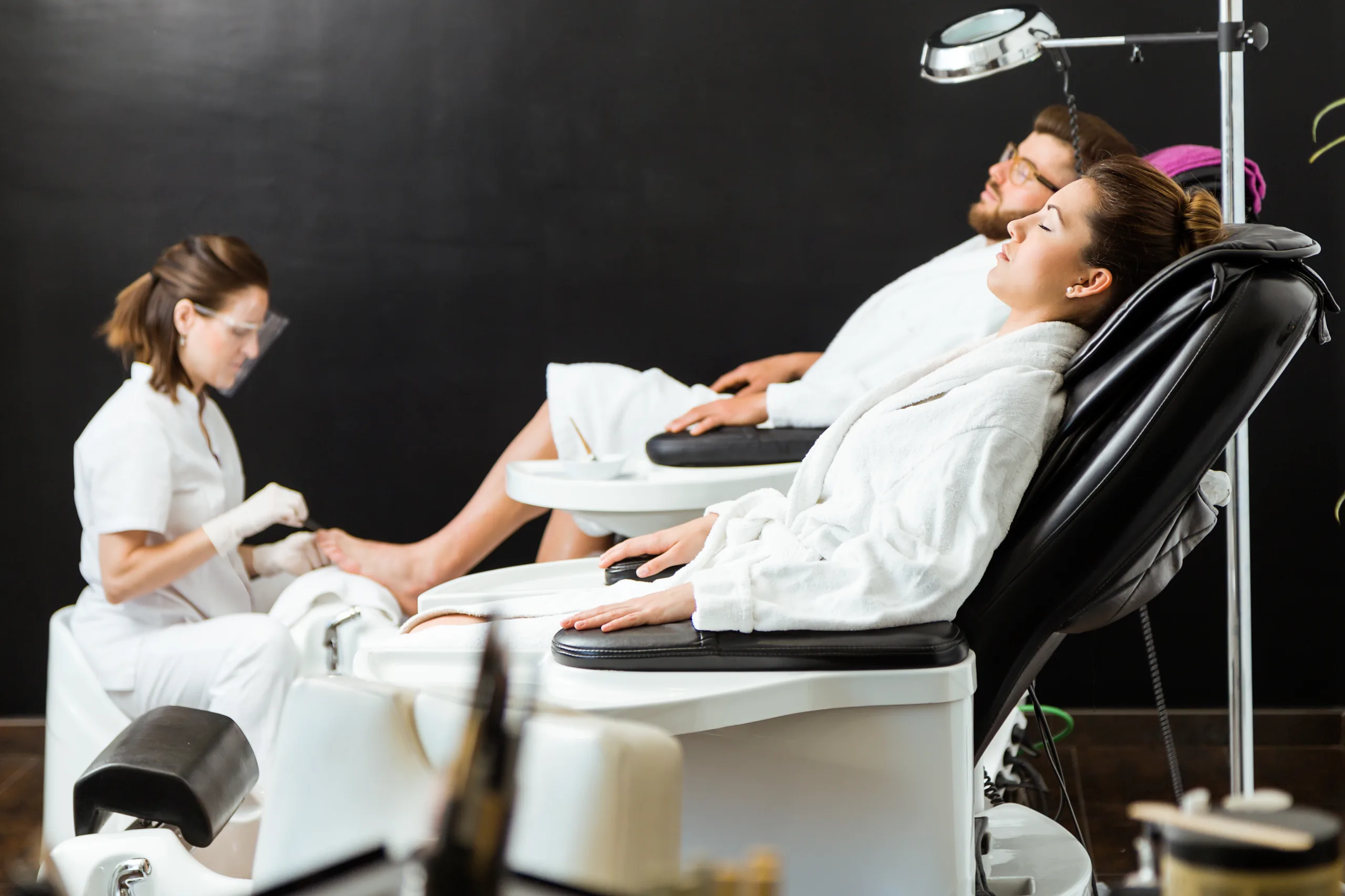
The pedicure zone needs comfort, plumbing coordination, hygiene planning, and privacy. Many salons make the mistake of placing pedicure chairs wherever they fit visually, then discovering too late that drainage, water supply, maintenance access, and cleaning flow are awkward. In a serious salon fit-out in Dubai or the UAE, pedicure planning should be discussed early with the interior designer, MEP team, and fit-out contractor. Moving plumbing later can become expensive, slow, and annoying, which is basically the holy trinity of fit-out pain.
Clients usually spend longer in pedicure chairs than manicure seats, so this area should feel more relaxed. Use softer lighting, comfortable spacing, side tables for drinks or phones, and finishes that handle water without looking clinical. If the salon has a premium positioning, consider semi-private pedicure bays, curtains, low partitions, or curved walls that give a cocoon feeling without fully closing the space. The goal is not to hide the client, it is to make her feel looked after, because a good pedicure zone should feel like a pause button in the middle of a fast UAE day.
Nail art deserves its own design thinking because it is one of the most shareable parts of the salon experience. If your salon offers detailed nail art, chrome finishes, gel extensions, BIAB, French variations, seasonal designs, or bridal nails, then the interior should give those services a proper visual home. A small nail art consultation point with display tips, shade boards, and clean lighting can help clients choose faster and spend more confidently. When people can see possibilities clearly, they are less likely to say, “Just do something simple.”
A drying zone or quick finishing station should not feel like an afterthought. It can be built into the manicure area, placed near retail, or designed as a small comfortable pause point before payment. A branded photo corner can also work beautifully, but it should not be cheesy or oversized unless the brand is intentionally playful. A textured wall, elegant mirror, soft logo, sculptural chair, or clean hand-photo surface can turn fresh nails into content, and in the UAE, that content can become free advertising with a little design intelligence.
The best nail salon interior design ideas are not random styles copied from other countries. They should match the UAE customer, the salon’s location, the service menu, and the price point. A salon in Jumeirah, Dubai Hills, or Saadiyat may lean into quiet luxury and privacy, while a salon in a student-heavy or younger community might benefit from bolder colour, playful mirrors, and social media moments. A mall kiosk-style salon needs instant visibility, while a destination beauty lounge can build a slower, more layered experience.
Before choosing a style, ask one simple question: what should the client feel when she walks in? If the answer is “calm and cared for,” then earthy tones, soft curves, and warm lighting may fit. If the answer is “fun and fashionable,” then bolder colours, statement furniture, and graphic walls may work better. If the answer is “premium and trustworthy,” then use durable materials, refined details, and a quieter palette. Design is not decoration sprinkled on top, it is the emotional language of the business.
Minimal luxury works extremely well for UAE nail salons that want a clean, expensive, and timeless feel. This style usually uses warm neutrals, stone-look surfaces, soft beige or ivory walls, brushed metal accents, hidden storage, and simple furniture with beautiful proportions. The space should feel edited, not empty, because minimal design becomes cold when there is no texture or warmth. Think of it like a luxury handbag: the beauty is in the stitching, the material, and the restraint, not in shouting for attention.
For a minimal luxury nail salon, the manicure tables should be sleek, the pedicure chairs should feel integrated, and the reception desk should look like a design feature rather than an office counter. Use curves to soften the space, especially around the reception, mirrors, wall niches, and ceiling details. Add subtle branding through engraved signage, tone-on-tone logos, or a beautiful feature wall instead of oversized graphics. This style is ideal for premium salons because it photographs well, ages well, and gives clients that quiet “this place knows what it is doing” feeling.
A soft boutique salon is warm, feminine, and friendly without becoming childish. This concept often uses blush, clay, champagne, cream, muted rose, dusty pink, or soft lavender, paired with rounded furniture and gentle lighting. It works well for neighbourhood salons, ladies salons, bridal-focused nail studios, and beauty spaces that want to feel welcoming rather than intimidating. The danger is going too sweet, because too many pinks, florals, and gold details can quickly make the salon feel less premium.
The smarter approach is to balance softness with structure. Use one or two feature colours, then ground them with stone, wood, textured paint, or matte metal. Built-in shelves can display polish colours like a boutique wall, while mirrors and lighting can create a soft glow around the service areas. A soft boutique salon should feel like entering a pretty, calm, well-organized dressing room, not a party decoration shop, and that difference comes down to restraint, material quality, and spacing.
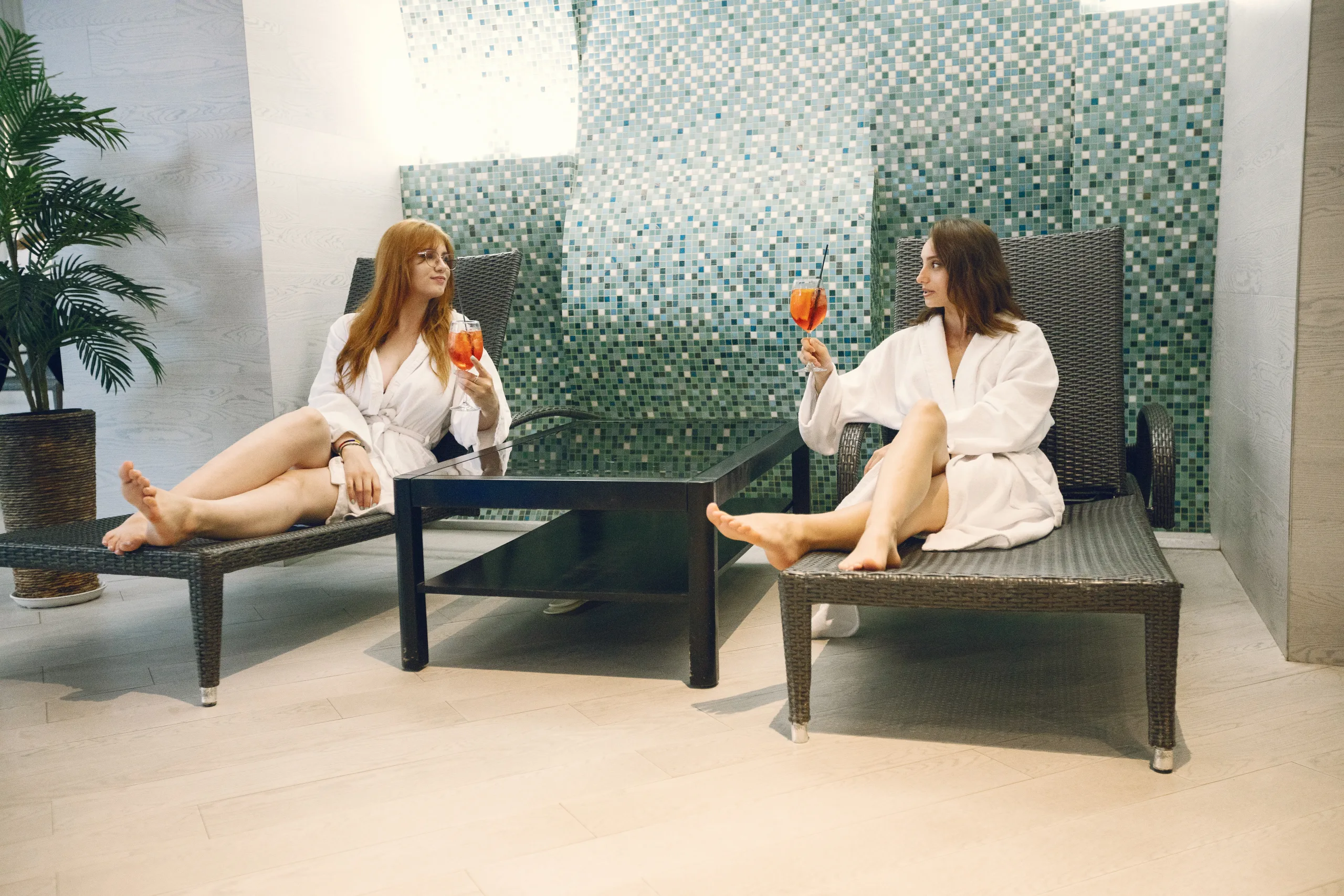
A wellness-inspired nail salon is perfect for clients who see nail care as self-care rather than just grooming. This style uses natural textures, earthy tones, indoor planting, soft lighting, calming scents, and quieter layouts. It can work especially well for salons offering non-toxic polish, vegan products, hand and foot rituals, massage add-ons, or organic skincare retail. In the UAE, where daily life can be intense, hot, and fast-paced, a wellness-led salon can feel like a small escape.
The design should avoid looking too rustic or spa-heavy unless that is the brand direction. A nail salon still needs brightness, hygiene visibility, and a sense of polish, so natural does not mean rough or dim. Use washable surfaces, easy-clean flooring, moisture-resistant materials, and practical storage while keeping the palette calm. The magic is in making the salon feel breathable, because clients often remember how a place made them feel more than the exact colour on the wall.
A social-media-ready nail salon is built for visibility, but it needs taste. The UAE is a highly digital market, and beauty customers often discover salons through Instagram, TikTok, Google reviews, influencer visits, and friend recommendations. That does not mean every wall needs neon text and flower installations. A truly smart content-friendly salon creates multiple small photo moments that look natural, premium, and brand-specific.
For example, you can design a manicure table with a beautiful top surface for hand shots, a mirror with flattering lighting for client selfies, a branded polish display wall, and a feature corner for campaign photos. The salon should look good in vertical video, because that is how people experience most beauty content now. Strong visual identity also helps staff create daily content without needing a full production team. When the salon itself becomes the content set, marketing becomes easier, faster, and more consistent.
A nail salon fit-out in the UAE needs more than mood boards and furniture procurement. It involves approvals, authority requirements, landlord rules, MEP coordination, fire safety, hygiene planning, and practical site execution. Depending on the emirate, area, mall, free zone, or master developer, the approval route may change, so salon owners should never assume that one location follows the same process as another. A salon in mainland Dubai, a TECOM area, a mall, a free zone, or Abu Dhabi may involve different submission steps and different authority coordination.
The safest approach is to involve an interior designer and fit-out contractor who understand commercial beauty spaces, not just residential interiors. Nail salons have specific operational needs: product storage, sterilization, chemical handling, water points, drainage, ventilation, electrical loads, task lighting, retail display, staff movement, and customer privacy. A beautiful design that ignores these details can become a daily headache. The best fit-out is the one where the client sees beauty, the staff feels efficiency, and the authorities see compliance.
For salons in Dubai, business licensing is connected to the correct commercial activity, and the premises must meet relevant authority and health requirements before operation. Dubai DET handles mainland licensing, while other districts and free zones may involve their own authority processes. Fit-out permits may require documents such as owner NOCs, Ejari or lease documents, appointed contractor details, approved drawings, and Civil Defence-related completion steps depending on the authority and building. This is why approval planning should happen before construction starts, not halfway through when the contractor is already on site and everyone is suddenly asking for drawings that were never prepared properly.
Hygiene planning should be designed into the space, not treated like a checklist at the end. Trakhees salon health guidance, for example, highlights practical requirements such as occupational health cards, clean uniforms, hand washing and sanitizing before and after customers, suitable storage, washable surfaces, covered waste bins, sterilization processes, disposable non-metal nail tools, and proper manicure and pedicure hygiene. Dubai Municipality has also continued to highlight product safety, salon compliance, Montaji-related systems, and smart monitoring initiatives in the beauty sector. For a salon owner, the message is clear: a premium salon is not only the one that looks beautiful, it is the one that can prove it works safely and cleanly every single day.
MEP is where many salon interiors either succeed quietly or fail loudly. Electrical points must support manicure lamps, drying machines, reception equipment, POS systems, display lighting, water heaters, sterilizers, and general salon operations. Plumbing must support pedicure stations, wash areas, pantry or utility needs, and sometimes facial or treatment areas if those are part of the licensed activity. Ventilation matters because nail products, polish removers, acrylic systems, cleaning chemicals, and hair or beauty products can create odours and discomfort if the air strategy is weak.
Lighting deserves special attention because nails are tiny detail work. A salon needs accurate task lighting at workstations, flattering ambient lighting for clients, strong mirror lighting if beauty services are included, and attractive feature lighting for brand atmosphere. Avoid relying only on decorative pendants because they may look cute but fail the technician. Flooring should be durable, anti-slip where needed, easy to clean, and resistant to stains from polish or chemicals. The ceiling should also be planned carefully because AC diffusers, access panels, sprinklers, speakers, cameras, and lights all need coordination, and a messy ceiling can ruin an otherwise elegant salon.
The cost of a nail salon fit-out in the UAE depends on the size, location, authority requirements, brand level, MEP scope, furniture quality, imported materials, and whether the unit is shell-and-core or already partially fitted. A small express nail studio will cost far less than a premium salon with custom joinery, private pedicure bays, high-end lighting, branded retail displays, and detailed MEP work. The biggest mistake is asking for a price before the scope is clear, because vague design always creates vague budgeting. A proper cost plan should separate design, authority approvals, fit-out works, MEP, furniture, signage, equipment, loose décor, professional fees, contingency, and opening stock.
A typical salon project can move through concept design, authority drawings, approvals, procurement, fit-out, inspections, snagging, and handover. Timelines can change quickly if landlord approvals are slow, materials are delayed, drawings need revisions, or MEP changes are discovered late. This is why it is smart to freeze the layout early and avoid changing the number of pedicure chairs, manicure stations, or wet points after approvals begin. Design changes feel small on paper, but on site they can affect drainage, power, flooring, ceiling, joinery, and approvals, like pulling one thread and watching half the sweater move with it.
| Fit-Out Element | Why It Matters | Common Mistake |
|---|---|---|
| Layout planning | Controls client flow, staff speed, and service capacity | Adding too many stations and making the salon feel cramped |
| Lighting | Affects nail quality, photos, comfort, and mood | Choosing decorative lighting without enough task lighting |
| Ventilation | Supports comfort and odour control | Treating AC as enough without planning product-related smells |
| Storage | Keeps the salon clean and premium-looking | Underestimating how many tools, towels, and products need hiding |
| Approvals | Keeps the project legal and on schedule | Starting work before drawings and permits are properly checked |
| Materials | Impacts durability, cleaning, and long-term appearance | Using delicate finishes that stain, scratch, or absorb moisture |
The common design mistakes are easy to avoid once you know them. Do not place the reception too deep inside the salon, because clients should know where to go immediately. Do not put pedicure chairs directly facing the entrance unless the concept is casual and the clients are comfortable being seen. Do not use dark moody lighting everywhere, because technicians need visibility and clients want their nail colour to look accurate. Do not forget staff comfort, because tired technicians and awkward workflows can damage service quality faster than a bad wall colour ever will.
A successful nail salon interior design in the UAE should balance beauty, hygiene, comfort, approvals, and business performance. The salon needs to look good, yes, but it also needs to work hard behind the scenes.
Every chair, light, shelf, sink, mirror, and storage drawer should support the customer experience and the daily rhythm of the team. When design is done properly, the space becomes more than a salon, it becomes a brand asset that helps attract clients, improve reviews, sell premium services, and make the business easier to run.
The best UAE salons are not always the biggest or most expensive. They are the ones that understand their audience, plan their layout carefully, invest in durable materials, respect hygiene and approval requirements, and create a memorable feeling from entrance to payment. Whether the concept is minimal luxury, soft boutique, wellness-inspired, or social-media-ready, the design should feel intentional from every angle. In a market where clients have endless choices, your interior can become the quiet reason they choose you first and keep coming back.
1. What is the best layout for a small nail salon in the UAE?
The best layout for a small nail salon is usually a compact reception at the entrance, manicure stations along one side, pedicure chairs placed near planned plumbing, and hidden storage built into walls or counters. The goal is to keep the customer journey simple while giving technicians enough space to work comfortably. For small salons, built-in furniture often works better than bulky loose pieces because it saves space and looks cleaner. Avoid overcrowding the salon with too many chairs, because a cramped salon can feel cheaper even if the finishes are expensive.
2. How can I make my nail salon look more luxurious without overspending?
Focus on lighting, storage, materials, and consistency before buying expensive decorative items. A clean neutral palette, beautiful reception desk, comfortable chairs, hidden clutter, matching hardware, and flattering lighting can make a salon feel premium without going wild on marble and imported furniture. Spend money where clients physically interact with the space, such as seating, worktops, mirrors, and wash areas. Luxury is often less about adding more and more about removing anything that looks random, messy, or poorly finished.
3. Do nail salons in Dubai need fit-out approvals?
In most commercial settings, interior fit-out work requires the relevant building, landlord, free zone, developer, municipality, or authority approvals before work begins. The exact process depends on the salon location, building type, lease structure, and authority jurisdiction. Drawings, contractor documents, NOCs, Civil Defence coordination, and completion checks may be required. Salon owners should confirm the approval path early because starting work without the right permissions can delay opening and create unnecessary costs.
4. What colours work best for nail salon interiors?
The best colours depend on the brand positioning, but soft neutrals, warm whites, blush, beige, taupe, sage, clay, champagne, and muted pastels work well for many UAE salons. These tones feel clean, flattering, and premium while allowing nail colours to stand out. Bolder colours can also work if the salon targets a younger or trend-led audience, but they should be used with control. The key is to choose a palette that looks good in real life and on camera, because salon interiors now live both offline and online.
5. What should be included in a nail salon fit-out checklist?
A nail salon fit-out checklist should include the approved layout, authority requirements, reception design, manicure and pedicure stations, plumbing points, drainage, electrical load, ventilation, lighting plan, flooring, wall finishes, sterilization area, storage, retail display, signage, staff area, waste management, and final snagging. It should also cover product safety, hygiene flow, equipment placement, and maintenance access. A checklist protects the budget because it reduces last-minute surprises. It also helps the salon open with fewer operational problems, which is exactly what every owner wants after weeks of fit-out stress.
Sign up to receive regular insights and lifestyle articles from Studio by DH, The Edit.