Home Spa & Wellness Room Design Ideas
Insights and Ideas
June 29, 2026
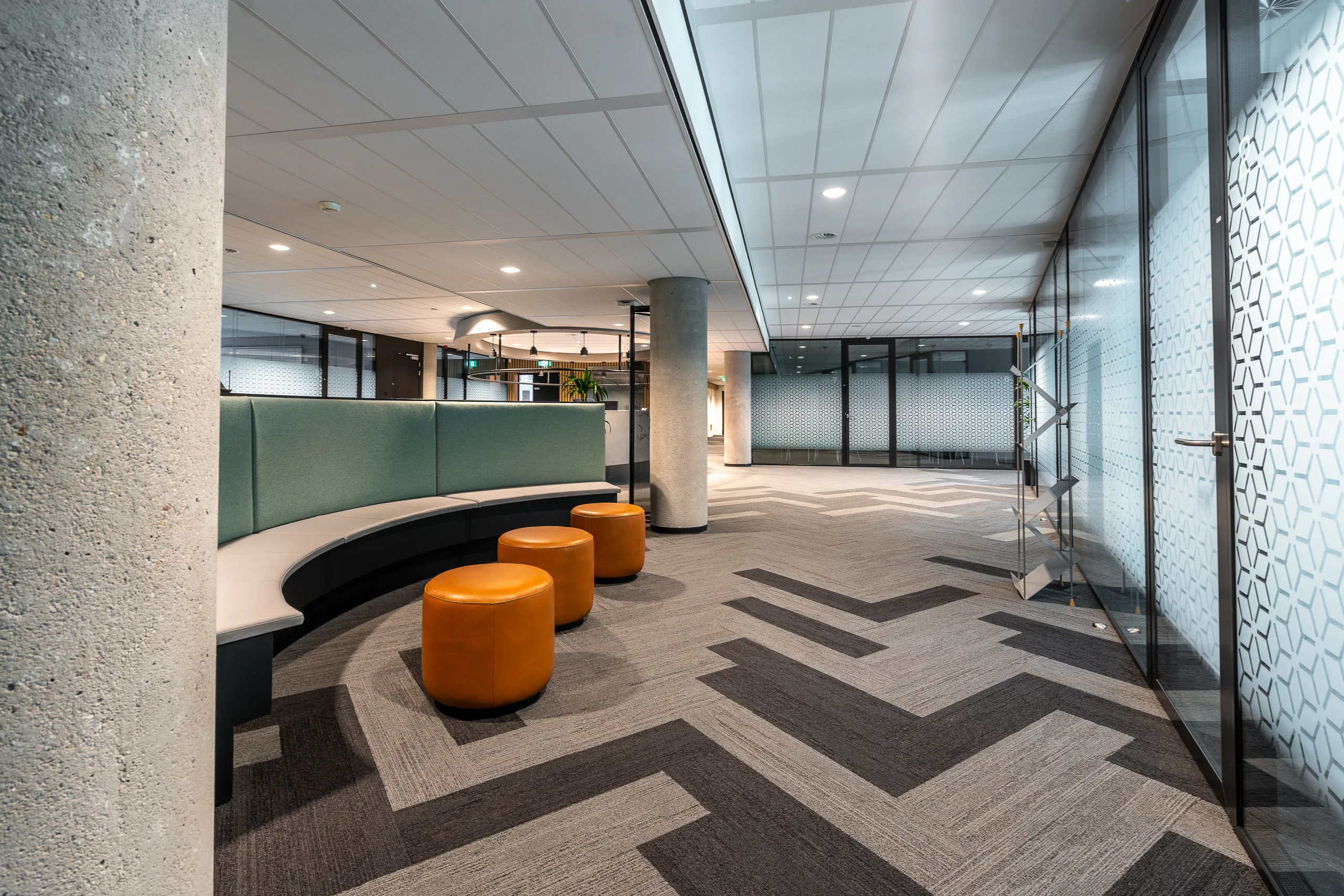

Corporate office interior design in Dubai is no longer just about creating a polished reception area, choosing elegant chairs, or adding a few marble finishes to impress visitors. The office has become a business instrument, almost like a silent senior employee that affects productivity, hiring, culture, client confidence, and daily decision-making. In a city where companies are expanding, relocating, upgrading, and competing for premium space, every square metre has to work harder than before. A well-designed office can make a team feel sharper, calmer, faster, and more connected, while a poorly planned one can quietly drain energy every single day. Think of the workplace like the operating system of a company: when it is smooth, intuitive, and well-built, people barely notice the friction because there is none; when it is clunky, everyone feels it.
Dubai’s business environment adds another layer to this conversation because the city is built on ambition, speed, hospitality, and global standards. A corporate office here has to serve employees from different cultures, welcome clients with confidence, support hybrid working patterns, and reflect the company’s positioning without looking forced. For law firms, investment companies, real estate firms, consultancies, tech companies, and regional headquarters, the design is part of the brand experience. Before a pitch deck opens or a contract is discussed, the space has already spoken. It tells visitors whether the company is organised, premium, approachable, innovative, traditional, or perhaps a little confused. That is why office interior design Dubai searches are no longer only about style inspiration; they are about business performance.Dubai’s Office Market Is Demanding More From Every Square Metre


Dubai’s office market is tight, competitive, and increasingly selective, which makes the design conversation more serious. Recent market reports show that average office rents in Dubai rose by 14% year-on-year in Q1 2026, prime rents increased by 16%, and occupancy stayed around 95%. That means companies are not just choosing offices; they are making expensive, long-term strategic decisions. When real estate costs rise, design mistakes become even more costly because unused meeting rooms, oversized executive areas, noisy open-plan desks, or badly placed storage can quietly waste thousands of dirhams every month. The question is no longer, “How many desks can we fit?” The better question is, “How can this space help the team perform better every day?”
This is where performance-led design becomes valuable. If a company leases an office in Business Bay, DIFC, Dubai Design District, JLT, Downtown Dubai, Sheikh Zayed Road, or Dubai Silicon Oasis, the location already carries a business message. The interior must then support that message with intelligent planning, not just expensive finishes. A compact office can feel premium when circulation is smooth, lighting is layered, meeting rooms are properly sized, and acoustic comfort is handled well. A large office can feel chaotic when departments are scattered, collaboration spaces are missing, and employees have nowhere to focus. In Dubai, where business moves quickly and clients expect a certain standard, a corporate office should feel like a well-designed airport lounge: calm, efficient, welcoming, and built for movement.
The best way to understand modern corporate office design is to stop treating the office like a container and start treating it like a performance engine. A container simply holds people, desks, printers, and meeting rooms. A performance engine helps people think clearly, meet efficiently, collaborate naturally, and feel proud of where they work. That shift matters because employees are more aware of their environment than ever before. Workplace research in 2025 found that employees in great workplaces are far more likely to stay, feel valued, and believe their environment supports growth. UAE-specific workplace insights also show that many employees still feel their offices are not fully helping them do their best work, especially when noise, lack of space, and weak functionality get in the way.
This does not mean every company needs a futuristic office with slides, nap pods, and neon signs that look like they were designed by a caffeine-fuelled gaming startup. For most Dubai businesses, performance design is much more practical. It means giving employees the right mix of quiet areas, collaborative zones, private rooms, comfortable workstations, natural textures, quality lighting, and spaces that match how the company actually operates. A legal office needs confidentiality and authority. A real estate office needs client hospitality and visual storytelling. A tech office needs flexibility and speed. A corporate headquarters needs hierarchy, brand expression, and room to grow. The office becomes powerful when it understands the business before it starts choosing furniture.
A high-performance office is not defined by how expensive it looks. It is defined by how well it supports the work happening inside it. This is where many companies in Dubai make the classic mistake: they jump straight into finishes, mood boards, and Pinterest-style references before asking how their teams actually use the office. Who needs silence? Who meets clients daily? Who works in confidential discussions? Who needs screens, pin-up walls, sample storage, phone booths, or quick breakout areas? Without these answers, even a beautiful office can become a daily headache. It may photograph well on handover day, but after three months, employees start creating their own awkward fixes with extra chairs, messy corners, and unofficial meeting spots.
A performance-led office begins with behaviour. Good designers study movement, communication, privacy needs, department relationships, client journeys, and future growth. This approach is especially important in Dubai because companies often scale quickly, hire internationally, and shift teams based on regional demand. A workplace must be structured enough to feel premium but flexible enough to adapt. Imagine a tailored suit with a little stretch in the fabric. It still looks sharp, but it does not restrict movement. That is what a well-designed corporate office should do: create order without stiffness, identity without noise, and comfort without losing professionalism.
Space planning is the foundation of office interior design in Dubai, and honestly, it is where the real magic either happens or disappears. You can choose the most beautiful finishes in the world, but if the layout is wrong, the office will still feel uncomfortable. Good space planning considers how people enter the office, where they pause, how they move between departments, how often they meet, where confidential conversations happen, and how noise travels. It also considers invisible details such as waiting time, visual privacy, cable routes, storage habits, and whether employees feel exposed or supported while working. These details may sound small, but together they shape the entire office experience.
A strong layout usually creates a natural rhythm between public, semi-private, and private zones. The reception and client areas should feel welcoming and controlled, while internal workspaces should support concentration and collaboration without becoming noisy. Meeting rooms should be located where visitors can access them without walking through sensitive staff areas. Leadership offices should feel accessible enough to support communication, but private enough for confidential work. Pantry and breakout areas should not disrupt focused teams, yet they should be close enough to encourage casual interaction. When this planning is done well, the office feels effortless. People do not need signs, explanations, or daily workarounds because the space quietly guides them.
The old debate between open offices and private offices is tired, and Dubai companies are right to move past it. The real answer is not one or the other; it is balance. Open work areas can support energy, visibility, and fast communication, but they can also create distraction if they are overused. Private offices can support focus and confidentiality, but too many of them can create silos and make the company feel closed off. Hybrid work zones solve this by giving people choices: focus pods, small meeting rooms, phone booths, collaboration tables, lounge-style discussion areas, and quiet workstations. Choice is the secret ingredient because different tasks need different settings.
A practical corporate office in Dubai might include open team areas for daily work, enclosed rooms for calls and confidential meetings, soft seating for informal conversations, and flexible rooms that can shift from training to workshops to client presentations. This is especially useful for businesses with hybrid teams, regional visitors, or consultants who do not sit in the office every day. Instead of assigning every person a fixed desk that may sit empty, companies can design shared settings around actual usage. Done properly, this does not feel like cost-cutting. It feels smarter, more agile, and more in tune with how modern work actually happens.
Branding inside a corporate office should feel like a natural part of the environment, not a giant logo shouting from every wall. In Dubai, where many companies want to look premium, there is sometimes a temptation to overdo the drama. The result can feel more like a showroom than a workplace. A stronger approach is to translate the brand into materials, proportions, colours, lighting, artwork, furniture style, and spatial experience. A finance firm may express trust through calm tones, precise detailing, and strong symmetry. A creative agency may express energy through flexible settings, bold accents, and layered textures. A law firm may express authority through rich materials, privacy, and composed meeting spaces.
The most credible offices understand restraint. They use brand identity like seasoning, not like the entire meal. A visitor should feel the company’s values before reading them on a wall. If the brand is about innovation, the office should support experimentation and digital collaboration. If the brand is about discretion, the design should protect privacy and reduce visual clutter. If the brand is about hospitality, the client journey should feel smooth from arrival to meeting to exit. This is where commercial interior design Dubai becomes a strategic service rather than decoration. The office becomes a three-dimensional brand experience that employees and clients can actually feel.
Productivity is often discussed as if it only depends on people’s discipline, software, or management style. Those things matter, of course, but the physical environment has a bigger role than many leaders realise. Poor lighting can make people tired. Bad acoustics can break concentration. Uncomfortable chairs can affect posture and mood. Overly cold or warm rooms can make meetings feel endless. Cluttered layouts can slow down movement and create mental noise. A well-designed office removes these small irritations before they pile up into daily frustration. It is not about pampering employees; it is about removing friction from the workday.
The World Green Building Council has highlighted strong evidence linking office design factors such as air quality, lighting, views of nature, and layout with health, wellbeing, and productivity. The WELL Building Standard also focuses on built-environment features that affect health and wellbeing, including air, water, light, movement, thermal comfort, sound, materials, mind, community, and nourishment. For Dubai offices, this is especially relevant because employees often spend long hours indoors due to heat, travel distances, and demanding corporate schedules. The office environment must therefore work harder to provide comfort, freshness, focus, and mental ease. Good design does not magically make people productive, but it gives productivity a much better chance to show up.
Lighting is one of the most underrated parts of corporate office interior design Dubai projects. Many offices rely too heavily on harsh overhead lighting, which can make spaces feel flat, tiring, and strangely lifeless. A better lighting strategy uses layers: ambient lighting for general brightness, task lighting for focused work, accent lighting for depth, and natural light wherever possible. In Dubai, daylight is abundant, but it must be controlled carefully through blinds, glazing, workstation orientation, and glare management. Too much direct sun can create heat and screen discomfort, while too little natural light can make the office feel disconnected and dull.
Air quality and thermal comfort are equally important because they affect how people feel even when they cannot explain why. A room that is too cold can make employees restless, while a warm meeting room can drain attention quickly. Ventilation, filtration, humidity control, and smart HVAC coordination should be part of the design discussion from the beginning, not treated as technical afterthoughts. This is especially important in Dubai, where outdoor heat places heavy demand on cooling systems. The goal is not just to cool the space; it is to create stable comfort across different zones. When lighting, air, and temperature are handled well, people feel more awake, more comfortable, and less distracted by the building itself.
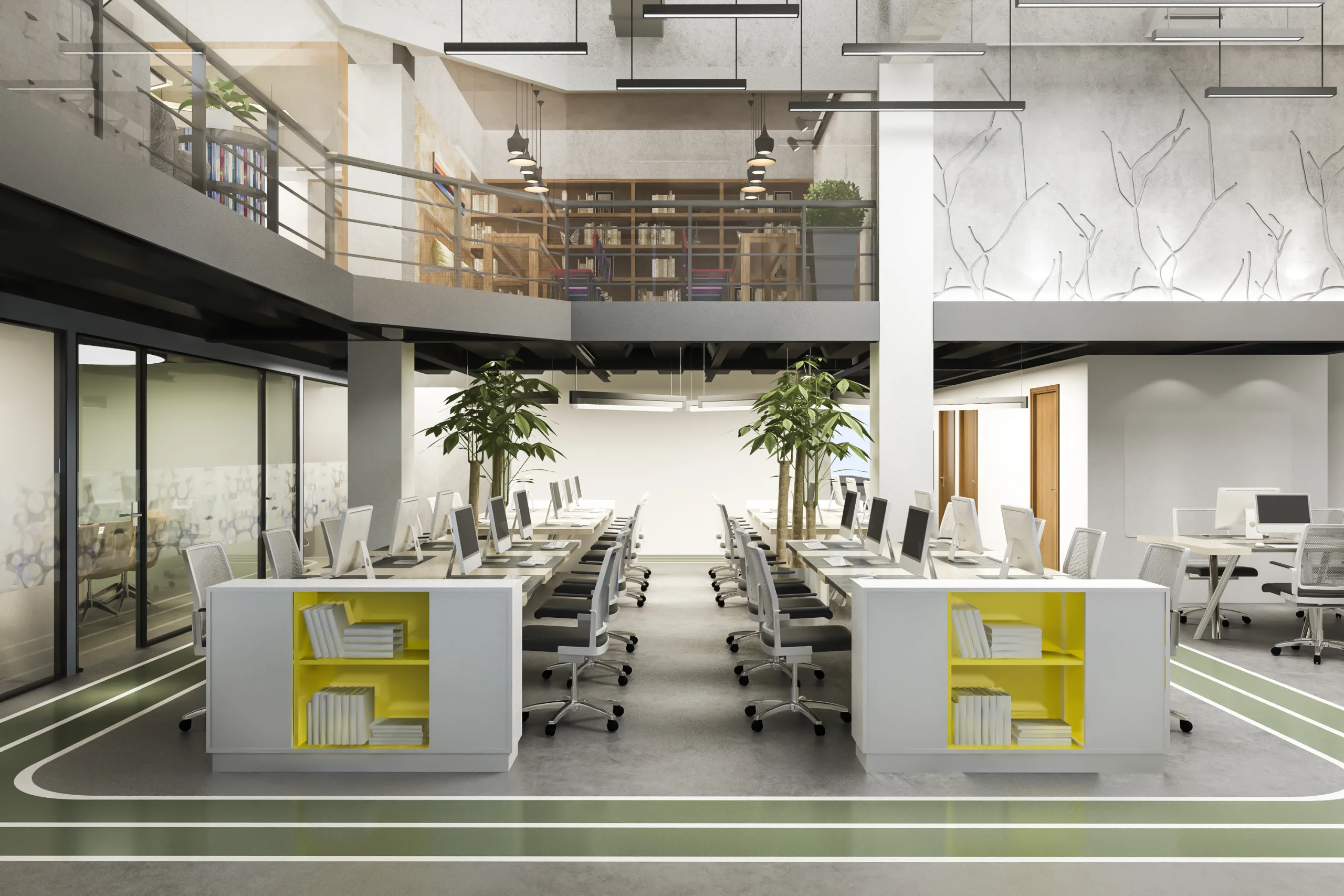
Noise is one of the fastest ways to turn a beautiful office into a productivity trap. Open workspaces can look clean and modern, but if employees hear every call, every keyboard, every laugh, and every meeting happening nearby, focus becomes a luxury. Acoustic design is not about making an office silent. It is about controlling sound so that different activities can happen without disturbing each other. This can involve acoustic ceiling panels, carpet or rugs, upholstered furniture, wall treatments, phone booths, meeting room seals, soft partitions, and smarter zoning. The best acoustic solutions are often invisible, which is why people only notice them when they are missing.
Privacy is just as important, especially for Dubai businesses that handle legal, financial, medical, property, HR, or executive matters. Confidential conversations should not happen in glass rooms with poor seals or open lounges beside workstations. Meeting rooms should be designed with the right acoustic rating, proper door systems, and visual privacy where needed. Even casual privacy matters because employees need places for sensitive calls, deep work, and one-to-one conversations. When privacy is missing, people either avoid important conversations or take them into corridors, cars, and coffee shops. That is not efficient, and it definitely does not look professional.
Open offices are not the villain, but badly designed open offices absolutely are. The problem usually begins when companies try to fit too many desks into one space without thinking about the type of work being done. Sales teams, design teams, finance teams, legal teams, and operations teams do not all use sound in the same way. Some need constant conversation, some need long periods of silence, and some switch between both. If everyone is placed in the same acoustic environment, the office becomes a tug-of-war between energy and concentration. Nobody wins, except maybe the person selling noise-cancelling headphones.
A smarter approach is to create acoustic neighbourhoods. Teams that need frequent discussion can sit near collaboration zones, while teams that need concentration can be placed in quieter areas with more acoustic treatment. Phone booths can absorb quick calls before they spill into the open plan. Small meeting rooms can handle two-person discussions that do not require a large boardroom. Breakout areas can be placed away from focused work zones so casual conversation does not become background noise. With the right acoustic planning, an open office can still feel alive without becoming chaotic.
Furniture is not just a procurement item; it is one of the most direct connections between people and the workplace. Employees interact with chairs, desks, tables, screens, storage, and meeting furniture for hours every day. If the furniture is uncomfortable, too rigid, too low, too high, or badly arranged, the office will never feel fully functional. Ergonomic chairs, adjustable monitor positions, suitable desk depths, proper leg clearance, and comfortable meeting seating all contribute to better daily performance. In Dubai, where offices often aim for a premium look, the key is choosing furniture that looks refined without sacrificing comfort.
Flexibility also matters because work patterns are changing. A boardroom may need to host client meetings in the morning, internal workshops in the afternoon, and video calls with overseas teams in the evening. Training rooms may need foldable furniture, movable partitions, writable surfaces, and integrated technology. Lounge areas may need power access so they are not just decorative corners. Flexible furniture helps companies adapt without renovating every time the team grows or changes. This is especially useful in Dubai’s fast-moving business environment, where companies may expand, restructure, or add regional functions quickly.
| Office Zone | Main Purpose | Design Priority | Common Mistake to Avoid |
|---|---|---|---|
| Reception | First impression and visitor control | Clear branding, comfort, smooth flow | Making it oversized but underused |
| Open Work Area | Daily team productivity | Ergonomics, acoustics, lighting | Fitting too many desks |
| Meeting Rooms | Collaboration and client discussions | Privacy, technology, acoustics | Poor sound insulation |
| Executive Offices | Leadership work and confidential calls | Authority, comfort, accessibility | Looking disconnected from the team |
| Breakout Area | Informal discussion and recharge | Warmth, flexibility, distance from quiet zones | Placing it beside focused desks |
| Focus Pods | Deep work and private calls | Acoustic separation, ventilation | Treating them as storage rooms |
Biophilic design sounds fancy, but the idea is beautifully simple: people feel better when spaces include natural elements. This can include indoor plants, natural textures, wood tones, stone finishes, soft organic shapes, daylight, views, water-inspired details, and earthy colour palettes. In Dubai, where many professionals spend much of the day indoors, these details can soften the corporate environment and reduce the sterile feeling that some offices have. A space does not need to look like a greenhouse to benefit from biophilic thinking. Even small touches, when placed intentionally, can make an office feel calmer and more human.
Materials also shape performance because they affect sound, maintenance, durability, and mood. Glossy surfaces may look luxurious, but too many of them can create glare and echo. Dark palettes can feel premium, but if overused, they may make workspaces feel heavy. Light colours can open a room, but they need durable finishes in high-traffic areas. The best material strategy balances aesthetics, climate, cleaning, acoustics, and brand identity. Wellness is not a separate design trend sitting in the corner with a plant wall. It is woven into every choice, from the chair people sit on to the air they breathe and the way light moves through the space.
Dubai’s corporate culture is global, fast, polished, and relationship-driven. Offices often need to impress international clients, support multicultural teams, and reflect a high level of professionalism. This makes corporate office interior design in Dubai different from generic office design in many other cities. A meeting room is not just a room with a table; it may be where investment decisions are made, partnerships are formed, disputes are settled, or regional strategies are approved. A reception area is not just a waiting space; it is part of the company’s credibility. A pantry is not just for coffee; it can become a soft networking zone where informal trust is built.
The strongest Dubai offices understand hospitality without turning the workplace into a hotel lobby. They offer comfort, clarity, and elegance, but they still function as places of work. Visitors should know where to go, employees should feel supported, and leadership should feel represented. Cultural awareness also matters. Prayer rooms, privacy needs, gender-sensitive spaces, accessible movement, and inclusive facilities may be relevant depending on the company and team. A good office feels international without becoming anonymous. It should belong to Dubai, belong to the company, and still feel practical for the people using it every day.
Client hospitality is a major part of Dubai business etiquette, and the office should support it gracefully. This starts with a clear arrival experience: signage, reception desk placement, seating comfort, lighting, refreshments, and the path from entrance to meeting room. Visitors should not feel lost, exposed, or forced to walk through messy staff areas. Meeting rooms should be close enough to the reception for convenience, but private enough for serious discussions. The design should make clients feel welcomed without overwhelming them. In simple terms, the office should say, “You are in good hands,” before anyone says a word.
Executive presence also needs balance. Leadership areas should reflect authority, but not create unnecessary distance from the team. In modern corporate offices, the best executive spaces are calm, refined, and functional rather than overly grand. They may include private offices, small meeting lounges, secure storage, video conferencing setups, and controlled access. For multicultural teams, the design should avoid assumptions. People from different backgrounds may have different expectations around privacy, collaboration, personal space, and hospitality. A successful Dubai workplace gives people options so the office feels comfortable across cultures, working styles, and seniority levels.
Sustainability has become a serious part of Dubai’s built environment, not a decorative tagline. Dubai’s Al Sa’fat green building system encourages better building performance by reducing energy consumption, improving system efficiency, supporting user safety, and lowering carbon impact. While many office interior projects happen inside existing buildings, the same thinking can guide smarter interior choices. Designers can specify durable materials, efficient lighting, water-conscious fixtures, low-emission finishes, modular furniture, and layouts that reduce the need for frequent renovation. This matters because a “cheap” office fit-out that needs major changes every two years is not really cheap. It is just a delayed expense wearing a discount costume.
Future-ready design also means planning for technology, hybrid work, and growth. Meeting rooms need proper video conferencing, acoustics, camera placement, cable management, and lighting that works on screen. Workstations need power access without cable chaos. Flexible zones should allow teams to reconfigure quickly. Smart controls can help manage lighting, cooling, and energy use. Dubai’s D33 Agenda and long-term urban vision are pushing the city toward innovation, sustainability, and global competitiveness. Corporate offices should reflect that direction by being adaptable, efficient, and built for the next chapter of work, not the last one.
Not every corporate office should look the same, and this is where many design briefs go wrong. A company may ask for a “modern luxury office,” but that phrase can mean completely different things depending on the business. A law firm, a fintech company, a real estate brokerage, a healthcare group, a media agency, and a family office all have different workflows, privacy needs, client expectations, and brand signals. Good design begins by understanding the business model. Who visits the office? How often do teams collaborate? How confidential is the work? How quickly is the company growing? What does the office need to communicate in the first five seconds?
The best office fit-out Dubai projects are tailored without becoming impractical. A high-end corporate office should still be easy to maintain. A creative office should still support focus. A compact startup office should still feel credible. A large headquarters should still feel human. Design strategy is about choosing priorities. Some businesses need stronger client-facing areas. Others need better internal collaboration. Some need impressive boardrooms. Others need flexible project rooms and content spaces. When the design matches the business type, the office stops being a generic workplace and becomes a competitive advantage.
Corporate headquarters and professional firms usually need a strong sense of structure. This includes clear reception flow, formal meeting rooms, executive areas, departmental zoning, secure storage, and refined finishes. For law firms, financial consultancies, investment offices, and corporate service providers, privacy and trust are essential. Clients should feel that their information is protected and their meetings are handled with discretion. This does not mean the office has to feel old-fashioned. A modern professional office can be warm, bright, and contemporary while still feeling serious and dependable. The goal is quiet confidence.
For headquarters, design must also support leadership visibility and organisational culture. Large companies often need boardrooms, training rooms, breakout spaces, wellness areas, flexible workstations, and internal branding that connects employees to the company’s mission. The challenge is making the space feel unified rather than fragmented. Departments should have identities, but the whole office should still feel like one organisation. Materials, lighting, signage, and shared spaces can help create that unity. A well-designed headquarters gives employees a sense of belonging and gives visitors a clear impression of scale, stability, and ambition.
Creative, tech, and hybrid teams need spaces that support movement, experimentation, and fast collaboration. These offices often benefit from flexible furniture, writable walls, informal meeting points, content rooms, project tables, and relaxed breakout areas. The design can be more expressive, but it still needs discipline. Too much visual noise can become distracting, and too much casual seating can reduce actual work functionality. The best creative offices feel energetic but not messy. They give people room to think, build, test, discuss, and reset.
Hybrid teams need an even sharper strategy because not everyone is present at the same time. This changes how desks, meeting rooms, and collaboration areas should be planned. Instead of designing around fixed attendance, companies can design around activity patterns. People may come to the office for workshops, client meetings, team alignment, training, or focused work away from home. That means the office must offer something worth commuting for. It should provide better technology, better collaboration, better social connection, and better focus than people can easily get elsewhere. A hybrid office fails when it feels like a less convenient version of home. It succeeds when it gives people a reason to show up.
Choosing the right design partner is one of the most important decisions in any corporate office interior design Dubai project. The right partner will ask about business goals before talking about finishes. They will want to understand your team size, departments, client journey, growth plans, budget, approvals, landlord requirements, MEP conditions, technology needs, and brand positioning. Be cautious with anyone who jumps straight into visuals without understanding operations. Beautiful renders are exciting, but they are not a strategy. A serious office design partner should be able to explain why the layout works, how the materials will perform, and how the design supports productivity.
It also helps to choose a team that understands Dubai’s pace and approval environment. Office projects often involve landlords, building management, authorities, contractors, suppliers, IT teams, and internal decision-makers. Delays can happen when design ideas ignore site realities, MEP limitations, fire safety requirements, acoustic needs, or procurement timelines. A good partner will help you balance ambition with buildability. They should also be transparent about costs because vague budgets can turn a promising project into a stressful one. The best design relationship feels collaborative. You bring the business vision, and the design team translates it into a workplace that performs.
Corporate office interior design in Dubai is moving into a smarter era. The best offices are not just attractive; they are useful, flexible, comfortable, brand-aligned, and built around performance. In a market where office rents are rising, occupancy is high, and companies are competing for talent and clients, design decisions carry real business weight. Every meeting room, workstation, reception area, acoustic panel, lighting layer, and material choice either supports the company or creates friction. The office is not background scenery anymore. It is part of how a business works, sells, hires, leads, and grows.
For Dubai companies, the opportunity is clear. A well-designed office can make employees feel more focused, clients feel more confident, and leadership feel more in control of the company’s future. The goal is not to copy trends or create a space that only looks good in photos. The goal is to build an environment that understands the business and helps people do better work inside it. When design is handled this way, the office becomes more than an address. It becomes a performance asset.
Corporate office interior design is the planning and design of workplace environments for businesses, with a focus on functionality, brand identity, employee productivity, client experience, and long-term efficiency. It includes space planning, furniture selection, lighting, acoustics, materials, technology integration, reception design, meeting rooms, executive offices, and employee areas. In Dubai, corporate office design often also includes hospitality elements because client experience plays a major role in business culture. The goal is to create an office that looks professional and helps people work better every day.
Office interior design is important for Dubai businesses because the city has a competitive corporate environment where first impressions, employee experience, and operational efficiency matter. A well-designed office can improve focus, collaboration, comfort, and client confidence. It can also help companies use expensive office space more intelligently, which is especially valuable when premium office rents are rising. For many businesses, the office is also a physical expression of the brand, so the design should communicate trust, quality, and ambition.
The cost of office interior design in Dubai depends on the size of the office, design complexity, material quality, furniture selection, MEP requirements, authority approvals, and whether the project is a light refresh or a full fit-out. A basic functional office will cost much less than a premium corporate headquarters with custom joinery, acoustic rooms, executive areas, and advanced technology. The best approach is to set a realistic budget early and ask the design partner to align the concept with that budget. This prevents the common problem of approving beautiful ideas that become difficult to build within the available investment.
A productive office design supports the actual tasks people perform throughout the day. It provides the right balance of focused work areas, collaboration spaces, private rooms, comfortable furniture, good lighting, acoustic control, clean circulation, and reliable technology. It also reduces daily friction, such as noise, poor meeting room access, uncomfortable seating, messy cables, or unclear visitor flow. Productivity does not come from one design feature alone; it comes from many small decisions working together smoothly.
Choose an office interior design company in Dubai by looking at its workplace experience, project process, understanding of corporate requirements, technical coordination, portfolio quality, and ability to connect design with business goals. A strong design partner should ask detailed questions about your team, workflow, clients, growth plans, budget, and brand before presenting visual ideas. They should also understand buildability, authority requirements, materials, furniture, MEP coordination, and project timelines. The right company will not just make your office look better; it will help your office work better.
Sign up to receive regular insights and lifestyle articles from Studio by DH, The Edit.