Home Spa & Wellness Room Design Ideas
Insights and Ideas
June 29, 2026
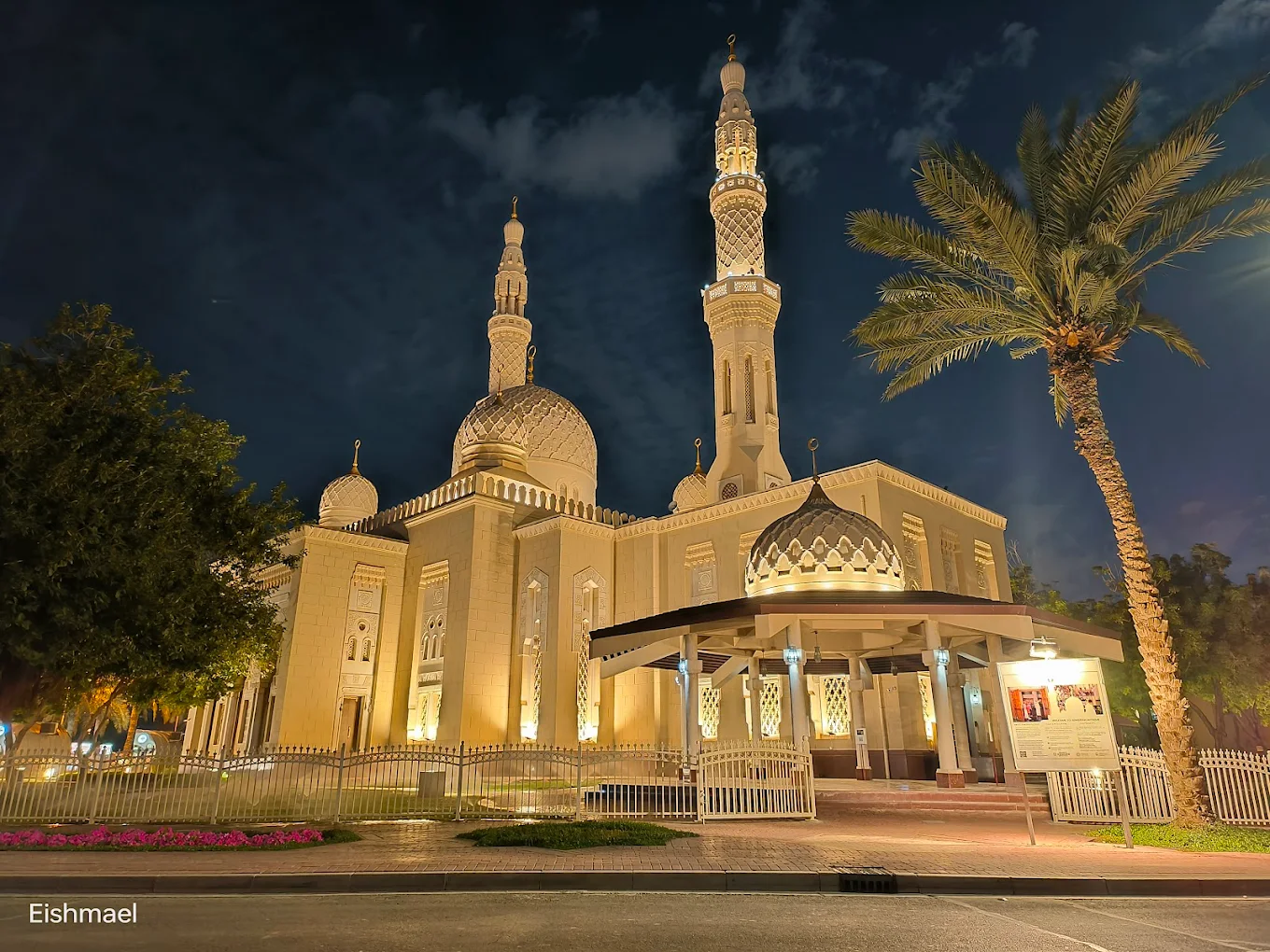

Dubai is often described through glass towers, futuristic skylines, luxury hotels, and interiors that look like they were designed for a magazine cover before they were designed for daily life. But then you step into Jumeirah Mosque, and the mood changes completely.
The space does not try to impress you through scale alone. It works more quietly, through symmetry, proportion, light, rhythm, and spiritual calm. That is exactly why the Jumeirah Mosque interior design still matters in a city that constantly reinvents itself. It reminds us that design does not need to shout to be unforgettable.
The mosque is one of Dubai’s most recognized cultural landmarks and remains deeply tied to the city’s public identity.
According to the official Jumeirah Mosque website, the mosque opened in 1979 and was a gift from the late Sheikh Rashid bin Saeed Al Maktoum, the former Ruler of Dubai and father of HH Sheikh Mohammed bin Rashid Al Maktoum.
That detail matters because it places the building within Dubai’s modern growth story, not outside it. This is not an old monument frozen in the past. It is a relatively modern structure that uses traditional Islamic architecture to speak to a rapidly changing city.


One of the most interesting things about Jumeirah Mosque is that it feels almost like a pause button in the middle of Dubai’s visual speed. The city is full of interiors designed for movement, malls, hotels, restaurants, offices, airport lounges, and branded experiences.
Jumeirah Mosque is different. It is designed around stillness. The interior invites the visitor to slow down, observe, and understand how space can affect emotion without relying on entertainment. That is a rare thing in modern urban design.
The mosque is also important because it is one of the few mosques in Dubai open to non-Muslim visitors through guided programs. The official Jumeirah Mosque website explains that since 1998, the mosque has welcomed visitors and travellers for guided tours, cultural discussions, and open Q&A sessions under the wider spirit of “Open Doors. Open Minds.”
This gives the mosque a dual role. It is a place of worship, but it is also a cultural classroom. The interior design therefore has to do more than look beautiful. It has to communicate. Every arch, carpet line, chandelier, calligraphic band, and decorative pattern becomes part of a visual language that introduces visitors to Islamic culture in a way that feels approachable rather than intimidating.
For interior designers, the mosque offers something very practical: a lesson in how repetition can become emotion. The repeated arches create a rhythm that feels balanced. The geometric ornament gives the eye somewhere to travel without creating visual chaos.
The chandeliers are decorative, yes, but they also help anchor the height of the space and make the hall feel warm instead of distant. The result is a kind of spiritual minimalism, not minimal in the plain, modern sense, but minimal in the sense that every element has a role.
For tourists, Jumeirah Mosque offers a rare chance to understand Dubai beyond shopping malls and observation decks. Visit Dubai describes the mosque as large enough to hold over 1,200 worshippers and built entirely from white stone in the medieval Fatimid tradition, with towering twin minarets framing its structure.
That exterior story naturally leads into the interior, where the same principles of balance, direction, and sacred geometry continue.
For residents, especially those who pass the mosque often on Jumeirah Beach Road, the building becomes part of the city’s emotional landscape. It is familiar, graceful, and instantly recognizable, but the interior still carries enough detail to reward a closer look.
To understand the interior design of Jumeirah Mosque, you need to understand the moment it belongs to. It was not built in a medieval Islamic city. It was built in modern Dubai, during a period when the emirate was rapidly developing and shaping its contemporary identity.
That makes the mosque especially interesting from a design perspective. It is traditional in style, but modern in purpose. It uses historic Islamic architectural references to create a landmark for a new Dubai, one that wanted to grow economically without losing cultural grounding.
The mosque’s opening in 1979 places it in a fascinating timeline. Dubai was already transforming, but it was not yet the global city we know today.
The decision to build a mosque with such a strong traditional architectural language helped preserve a visible cultural anchor in an urban environment that would later become known for speed, ambition, and reinvention.
This is why the mosque does not feel like a decorative heritage project. It feels intentional. It holds its place confidently among the newer, louder structures around it.
The official history notes that Jumeirah Grand Mosque opened in 1979 and was a gift from the late Sheikh Rashid bin Saeed Al Maktoum. That origin gives the building a civic meaning beyond architecture. It was not created only as a neighborhood mosque. It became a public symbol of faith, culture, hospitality, and continuity.
In a city where development often looks toward the future, the mosque looks both backward and forward at once. It draws from Islamic architectural memory while serving a modern community.
This is also why the mosque’s interior design feels so deliberate. A religious interior is never only about decoration. It is about orientation, discipline, calm, and collective experience. The prayer hall needs to support worshippers in rows.
It needs to guide the eye toward the qibla direction. It needs to create a sense of humility without feeling bare. Jumeirah Mosque achieves this through ordered space, controlled ornament, and a palette that feels warm rather than heavy. The design does not overwhelm worshippers or visitors. It gives them room to breathe.
Jumeirah Mosque’s cultural role became even more visible through its visitor program. The official site says the mosque has been open to visitors since 1998 for guided tours, interactive cultural discussions, and open Q&A sessions.
That openness affects how people experience the interior. Visitors are not just looking at a beautiful space from a distance. They are invited to ask questions, learn about prayer, understand etiquette, and see how the architecture supports Islamic practice.
The Sheikh Mohammed Centre for Cultural Understanding describes its wider mission as helping people learn about the history, culture, and traditions of the UAE through guided tours and programs led by local Emiratis.
In that context, Jumeirah Mosque becomes more than a building. It becomes a bridge. Its interior design supports that bridge by being visually rich but emotionally accessible. There is enough detail to fascinate a designer, enough calm to comfort a visitor, and enough structure to clearly communicate the sacred purpose of the space.
The architecture of Jumeirah Mosque is often described through its Fatimid-style inspiration, and that is a useful starting point. Fatimid architecture is associated with symmetry, arches, domes, decorative carving, and a strong relationship between structure and ornament. But what makes Jumeirah Mosque interesting is not that it copies a historic style. It adapts that language for Dubai. The building feels traditional without feeling like a museum replica. It has a polished, civic quality that suits its location and its role as one of the city’s most photographed landmarks.
A mosque’s exterior and interior are always in conversation. The outside prepares you for the inside. At Jumeirah Mosque, the white stone, twin minarets, carved surfaces, and domed forms create an atmosphere of purity and balance before you enter. Once inside, the same logic continues through arches, columns, calligraphy, chandeliers, and repeated motifs. The building does not switch personalities at the door. It carries one design language from the facade into the prayer hall, which is why the experience feels cohesive.
Visit Dubai identifies the mosque as being built in the medieval Fatimid tradition, with its white stone structure and twin minarets forming key architectural features. Symmetry is central to this impression. In Islamic architecture, symmetry is more than visual neatness. It reflects order, unity, and balance. When you look at the mosque from the outside, the twin minarets frame the central mass of the building. When you move inside, the arches and columns create a similar rhythm, guiding the eye across the prayer hall in a controlled, peaceful way.
This sense of order is one reason the Jumeirah Mosque interior feels calm even when it is visually detailed. The decoration does not appear randomly placed. Patterns repeat. Arches align. Chandeliers sit within the logic of the ceiling. The space feels measured, almost musical. Think of it like a well-composed piece of music: the melody may have variation, but the rhythm keeps everything together. That is what symmetry does here. It allows the mosque to carry ornament without losing clarity.
The mosque’s white stone exterior is one of its defining features, especially because it reflects sunlight during the day and takes on a soft glow when illuminated at night. Visit Dubai notes that Jumeirah Mosque is built entirely from white stone and can accommodate over 1,200 worshippers. That material choice supports the mosque’s overall sense of purity and openness. White stone also helps the carved details remain visible without feeling visually heavy. It gives the architecture a gentle dignity.
Inside, the same design vocabulary appears in a more intimate way. Arches soften the transitions between structural bays. Columns create rhythm and proportion. Domes and ceiling details lift the eye upward, reminding visitors that sacred architecture often works vertically as well as horizontally. The chandelier becomes a central visual anchor, not simply a light fixture. It draws attention to the height of the prayer hall while adding warmth to the atmosphere. This balance between geometry and softness is one of the reasons the mosque’s interior continues to feel timeless.
| Design Element | Interior Role | Design Effect |
|---|---|---|
| Arches | Frame movement and views inside the prayer hall | Creates rhythm, softness, and visual continuity |
| Columns | Support the hall and divide the space into ordered zones | Adds proportion and structure |
| Chandeliers | Provide light and central visual focus | Adds warmth, ceremony, and scale |
| Geometric patterns | Decorate walls, arches, and ceiling areas | Creates unity through repetition |
| Calligraphy | Adds sacred text and cultural meaning | Turns ornament into communication |
| Carpet alignment | Organizes worshippers in rows | Supports prayer, discipline, and collective order |
The interior of Jumeirah Mosque is not designed for spectacle in the way many modern luxury interiors are. Its beauty comes from harmony. You notice the arches first, then the columns, then the ceiling details, then the calligraphy, then the way light falls across the surfaces. Nothing feels isolated. Every detail belongs to a larger system. That is one of the strongest lessons of Islamic interior design: ornament is not just decoration. It is structure, meaning, rhythm, and atmosphere working together.
The prayer hall reflects a deep understanding of how people experience sacred space. A mosque interior must welcome individuals while organizing a community. It must feel open enough for gathering and quiet enough for concentration. It must support ritual movement without becoming visually empty. Jumeirah Mosque handles this beautifully. The space is decorative, but not chaotic. It is formal, but not cold. It has enough grandeur to feel important, but enough softness to feel human.
The prayer hall is the emotional core of the mosque. Its layout is organized around the needs of worship, especially alignment, direction, and collective prayer. In Islamic sacred architecture, the interior usually guides worshippers toward the qibla wall, which indicates the direction of prayer toward Makkah. While visitors may first notice chandeliers or arches, the deeper design logic is about orientation. The space teaches through arrangement. You feel where attention is meant to go.
This is where the mosque’s calm becomes more than a mood. It is a design outcome. The repeated rows, balanced proportions, and visual direction reduce distraction. The hall does not compete with the act of worship. Instead, it supports it. That support is subtle, but powerful. In modern interior design, especially in hospitality and residential projects, designers often talk about “wellness” and “calm.” Jumeirah Mosque shows that these ideas are not new. Sacred architecture has been using proportion, repetition, filtered light, and material restraint to create emotional balance for centuries.
The arches inside Jumeirah Mosque are one of the most memorable features because they create both structure and grace. They frame views across the interior, making the space feel layered rather than flat. The columns below them add a steady rhythm, almost like punctuation in a long sentence. Together, arches and columns shape movement and sightlines. They also make the hall feel human in scale, even when the ceiling rises above.
The chandeliers add another layer of character. In many religious interiors, lighting is symbolic as well as practical. Light can represent guidance, clarity, and presence. At Jumeirah Mosque, the chandeliers and lantern-style fixtures bring warmth into the space, softening the stone and painted surfaces. They create focal points without overpowering the architecture. The ornamentation around them, including geometric and floral-inspired detailing, feels controlled and purposeful. This is not decoration for decoration’s sake. It is ornament that helps the room feel alive.
The interior palette is one of the most underrated aspects of the mosque. Instead of relying only on stark white or heavy gold, the space uses soft colors, decorative bands, and patterned surfaces to create warmth. Depending on where you stand, you may notice blue ceiling details, pale arches, calligraphic borders, and carefully repeated motifs. These colors do not fight each other. They sit within a disciplined visual system, which is why the interior feels rich but still peaceful.
Calligraphy is especially important because it changes the role of decoration. In Islamic design, calligraphy often carries sacred meaning, turning the wall into a surface of remembrance and reflection. Geometric pattern also has a deeper purpose. It suggests infinity, order, and unity without relying on figurative imagery. This is one reason Islamic interiors can feel both abstract and emotionally powerful. They invite contemplation through pattern, not portraiture. In Jumeirah Mosque, that approach creates a space that feels rooted in tradition while still accessible to modern visitors.
Designers can learn a lot from Jumeirah Mosque, especially now that many interiors are becoming overloaded with trends. Scroll through design platforms and you will see the same materials, the same curved sofas, the same travertine tables, the same brushed metal finishes, and the same “quiet luxury” captions repeated until everything starts to blur. Jumeirah Mosque offers a different kind of lesson. It shows that timeless design is not about chasing novelty. It is about clarity, proportion, meaning, and emotional consistency.
The mosque’s design works because it has discipline. It does not throw every possible decorative idea into the room. It repeats selected elements until they form a rhythm. It uses ornament, but anchors it within architecture. It introduces color, but keeps the palette controlled. It creates grandeur, but never forgets the human experience. That is a powerful lesson for anyone designing homes, hotels, cultural spaces, wellness interiors, or public buildings in Dubai today.
One of the strongest design principles inside Jumeirah Mosque is repetition. The arches repeat. The columns repeat. The patterns repeat. The carpet rows repeat. But the result is not boring because repetition here is rhythmic, not lazy. It is like the beat in music. You may not focus on it every second, but it holds the whole experience together. Without repetition, the interior would feel scattered. With repetition, it feels composed.
Modern interiors often fear repetition because clients sometimes associate it with simplicity or lack of creativity. Jumeirah Mosque proves the opposite. Repetition can create depth when it is handled with care. A repeated arch becomes a journey. A repeated motif becomes atmosphere. A repeated line in a carpet becomes a system for prayer and movement. For designers, this is a reminder that not every corner needs a new idea. Sometimes the strongest move is to repeat the right idea with confidence.
There is a common misunderstanding that ornament automatically means excess. Jumeirah Mosque challenges that. Its ornamentation is detailed, but it is not random. The patterns, carved elements, calligraphic bands, and ceiling details all belong to a cultural and spiritual design language. They are not simply there to make the room look expensive. They help express faith, order, beauty, and continuity. That is the difference between decoration and meaningful ornament.
This lesson matters deeply in Dubai, where luxury interiors can sometimes become overly dependent on expensive materials rather than thoughtful design. Marble, brass, stone, and custom joinery can look beautiful, but without meaning they can feel empty. Jumeirah Mosque shows another path. It uses detail to support emotion. It gives the eye something to explore, but it also gives the mind something to understand. That is the kind of design that lasts longer than a trend cycle.
Jumeirah Mosque also proves that traditional design does not need to feel outdated. The mosque was opened in 1979, yet its architecture still feels relevant because it is built on principles that age well. Symmetry ages well. Natural light ages well. Human proportion ages well. Meaningful pattern ages well. These principles are not tied to one decade or one design trend. They belong to a deeper visual language.
This is especially important in modern Dubai, where the city is always balancing heritage and innovation. The best design in Dubai does not ignore tradition, and it does not blindly copy it either. It interprets it. Jumeirah Mosque is a strong example of that balance. It brings traditional Islamic architecture in Dubai into a modern urban context without diluting its identity. That is why the mosque still feels dignified, relevant, and emotionally resonant.
For visitors, Jumeirah Mosque is one of the most accessible ways to experience Islamic architecture and Emirati culture in Dubai. It is not just a photo stop, although the exterior is absolutely photogenic. The real value comes from entering the mosque, listening to the guide, observing the interior, and understanding why the space is designed the way it is. The guided experience turns the building from something you look at into something you learn from.
The official Jumeirah Mosque website lists public guided visits at 10:00 AM and 2:00 PM, with registration opening 30 minutes before each session. Admission is listed at AED 45 per person, including light Emirati refreshments and Majlis activities, and public visits are available Saturday to Thursday, with the mosque closed on Fridays. These details are useful for tourists, but they also reinforce the mosque’s broader role. The visit is not only architectural. It is cultural, social, and educational.
The guided mosque visit is designed to make the experience comfortable for people who may be entering a mosque for the first time. The Sheikh Mohammed Centre for Cultural Understanding describes the Jumeirah Mosque Visit as a program that offers guided tours of the landmark while providing insights into Islamic traditions and Emirati culture. This matters because many visitors admire Islamic architecture visually but may not understand the religious and cultural practices behind it. The tour helps connect those dots.
Inside, visitors can observe how the interior supports worship, from the prayer rows to the qibla orientation, from the absence of figurative imagery to the presence of calligraphy and geometric pattern. The experience also makes the mosque feel less distant. Instead of treating the space as something mysterious or closed, the program encourages respectful curiosity. That is a big part of why Jumeirah Mosque has become such a meaningful cultural attraction in Dubai. It does not simply display heritage. It invites people into a conversation with it.
Because Jumeirah Mosque is an active place of worship, visitors are expected to dress modestly and behave respectfully. The official public visit page notes that modest clothing is preferred and directs visitors to dress code guidance for more details. This is not just about rules. It is about understanding the nature of the space. A mosque interior is not a museum gallery or a hotel lobby. It is a sacred environment, and the way visitors dress and move through it should reflect that.
Good etiquette also improves the experience. When visitors enter quietly, listen carefully, and observe the details with patience, the design begins to reveal itself. The arches stop being just arches. The carpet rows stop being just lines. The calligraphy stops being just decoration. Everything becomes part of a larger story about faith, culture, beauty, and order. That is the real reward of visiting Jumeirah Mosque. You do not just see a beautiful interior. You begin to understand why it feels beautiful.
Jumeirah Mosque occupies a special position in Dubai because it represents a side of the city that is sometimes overshadowed by the skyline. When people think of Dubai, they often imagine the Burj Khalifa, Palm Jumeirah, luxury retail, beach clubs, and high-rise hotels. Those are real parts of the city, of course. But Jumeirah Mosque tells another story. It speaks about continuity, hospitality, faith, and cultural confidence. It shows that modern Dubai is not only about building higher and faster. It is also about preserving spaces where people can connect with meaning.
That is why the mosque’s interior design feels especially relevant today. As Dubai continues to grow, the need for culturally grounded design becomes stronger, not weaker. Interiors that borrow from heritage in a thoughtful way can help create places that feel rooted rather than generic. Jumeirah Mosque does this beautifully. It uses traditional Islamic design principles without feeling like a stage set. It feels lived in, respected, and active. That authenticity is difficult to fake.
The most powerful thing about the Jumeirah Mosque interior design is that it feels human. Yes, it is symmetrical. Yes, it is ornamented. Yes, it follows Islamic architectural principles. But beyond all of that, the space feels emotionally understandable. You do not need to be an architect to sense its calm. You do not need to be a designer to notice its balance. You do not need to know every historical reference to feel that the room has been designed with care.
This is where great architecture becomes universal. The specific language is Islamic. The emotional effect is human. The interior uses light, pattern, proportion, and repetition in ways that people instinctively respond to. It reminds us that beauty is not always about surprise. Sometimes beauty is about recognition, rhythm, and belonging. In a city like Dubai, where so much is designed to amaze, Jumeirah Mosque offers something slightly different. It does not just amaze. It settles you.
Jumeirah Mosque is one of Dubai’s most meaningful examples of how traditional Islamic architecture can live beautifully inside a modern city.
Its interior design is calm, ordered, decorative, and deeply purposeful. The arches create rhythm, the chandeliers add warmth, the calligraphy brings meaning, and the geometric patterns turn the space into a quiet study of unity and balance.
Nothing feels accidental. Every detail supports the atmosphere of worship, learning, and cultural openness.
What makes Jumeirah Mosque especially powerful is its ability to connect different audiences. Worshippers experience it as a sacred space. Visitors experience it as a cultural bridge. Designers experience it as a masterclass in proportion, repetition, and meaningful ornament.
In a city known for constant change, the mosque remains a reminder that timeless design does not need to reject the future. It simply needs strong roots. Jumeirah Mosque has those roots, and that is why its interior continues to inspire anyone interested in Islamic design, Dubai culture, and architecture that still knows how to speak softly.
The interior of Jumeirah Mosque is special because it combines traditional Islamic design principles with a calm and welcoming atmosphere. Its arches, columns, chandeliers, calligraphy, and geometric patterns work together instead of competing for attention. The space feels richly detailed, but not overwhelming. That balance is what makes it memorable. It is a great example of how ornament can support spirituality, cultural storytelling, and architectural harmony at the same time.
Jumeirah Mosque is widely known for its Fatimid-style Islamic architecture. Visit Dubai describes it as being built from white stone in the medieval Fatimid tradition, with twin minarets and enough capacity for over 1,200 worshippers. The style can be seen in its symmetry, domes, arches, carved details, and balanced composition. Inside, the same design language continues through repeated arches, decorative motifs, and carefully organized prayer space.
Yes, non-Muslims can visit Jumeirah Mosque through guided cultural programs. The mosque has welcomed visitors since 1998 for guided tours, interactive discussions, and open Q&A sessions. The public visit is designed to help people understand Islamic traditions, Emirati culture, and the architecture of the mosque in a respectful and accessible way. This makes it one of the best cultural experiences in Dubai for visitors who want to learn beyond the usual tourist attractions.
The official public visit page lists guided visits at 10:00 AM and 2:00 PM, with registration opening 30 minutes before each session. Public visits are available from Saturday to Thursday, and the mosque is closed on Fridays. Admission is listed at AED 45 per person, including light Emirati refreshments and Majlis activities. It is always smart to check the official website before visiting, as timings and arrangements can change.
Jumeirah Mosque is important because it represents Dubai’s cultural identity in a city often associated with futuristic architecture and luxury development. Opened in 1979 as a gift from Sheikh Rashid bin Saeed Al Maktoum, it stands as a landmark of faith, hospitality, and heritage. Its interior design shows that tradition can still feel relevant in a modern urban setting. It is not just a mosque, it is a cultural bridge that helps residents and visitors understand Dubai on a deeper level.
Sign up to receive regular insights and lifestyle articles from Studio by DH, The Edit.