

The Dubai Mall Interior
A Journey Through Interior Themes
Introduction: More Than a Mall
The Dubai Mall isn’t just the largest shopping mall in the world, it’s a living city within a city. With over a million square meters of space, the mall is a masterclass in experiential design, retail innovation, and interior architecture that reflects Dubai’s reputation as a global hub of luxury and creativity. From immersive art and curated interiors to high-end retail and dining, the Dubai Mall offers a multi-sensory journey shaped by design, detail, and cultural ambition.
Whether you’re exploring iconic retail spaces or studying immersive design strategies, resources like the curated UAE Interior Guides offer deeper insights into how local culture shapes architectural narratives across the country.
Architectural Grandeur Meets Interior Innovation
A City Within a City
The Dubai Mall was built with scale and sensation in mind. Designed to connect retail, entertainment, and lifestyle zones, the layout uses intuitive navigation, wide promenades, open atriums, and natural light guiding the experience.
The dubai mall interior design follows a cohesive logic where materials are chosen not just for aesthetics but for movement, acoustics, and ambient interaction from polished stone flooring to hand-finished wood paneling and sculpted ceilings that flow across districts.
Design Zones That Define Experience
Fashion Avenue
This luxury district feels more like a modern museum than a retail area. Soft lighting, reflective glass storefronts, and minimalist architecture give each brand room to breathe. Every material from the marble walkways to the acoustic fabric ceilings is designed to complement rather than compete with the fashion.
The Souk
Evoking the textures of old Dubai, this zone features warm lighting, mosaic tiles, and decorative archways. Arabic motifs are engraved into walls and lanterns hang above cozy walkways creating a balance between traditional ambiance and modern structure.
The Village
An open-roof design simulates outdoor urban space with faux facades, blue sky ceilings, and cobblestone-inspired flooring. It creates a relaxed, al fresco feeling within the climate-controlled environment of the mall.
Renovation and Expansion: A New Era of Design
Dubai Mall continues to evolve not just with new brands, but with design updates across its core interior infrastructure.
Latest Renovations Include:
- Natural-toned flooring with modular patterns to create visual boundaries
- Dynamic lighting systems that adjust with time of day
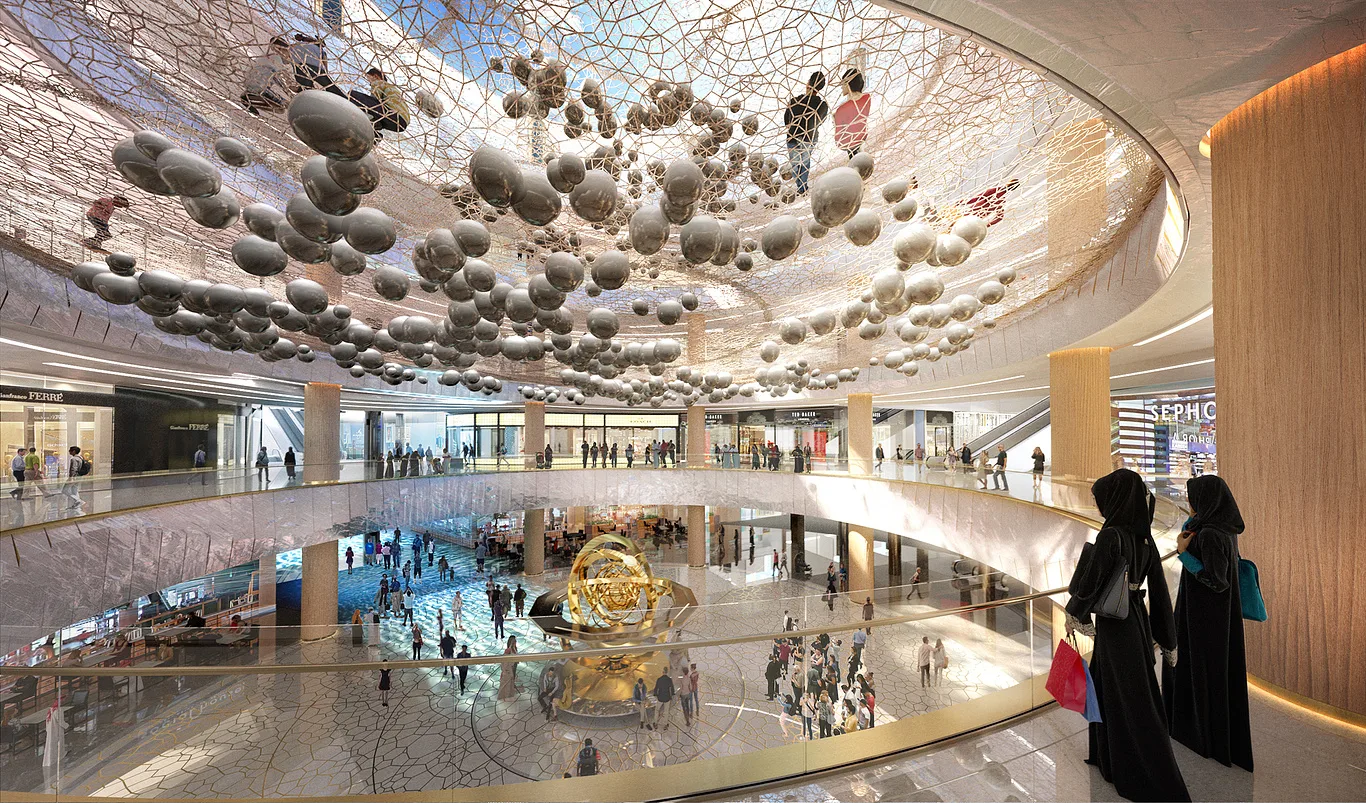
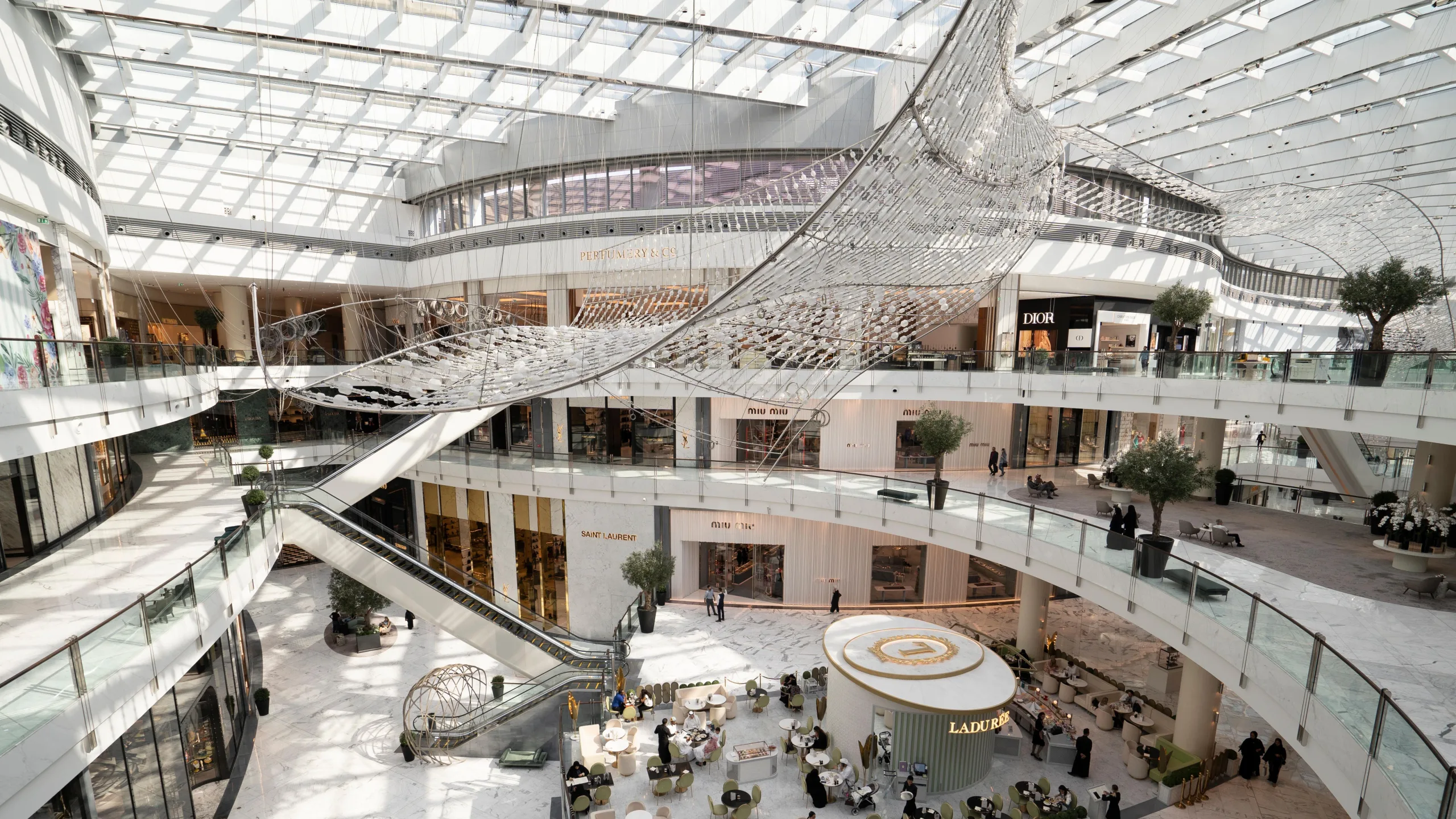
- Larger ceiling sculptures and central art installations in atriums
- Smart wayfinding screens, digital concierge desks, and app integration
- Luxurious new restrooms and lounges with high-end finishes
Zabeel Expansion
The new Zabeel wing connects through a bridge and offers a more tranquil, gallery-like experience. Neutral palettes, modern lighting, and carefully curated furniture pieces turn the space into a design showroom for luxury lifestyle brands.
Key Interior Highlights
The Grand Atrium
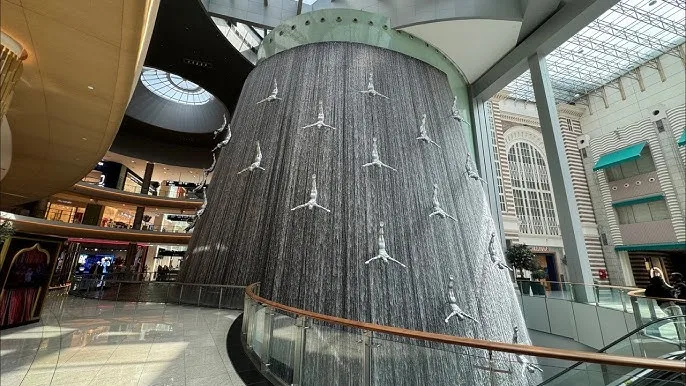
Massive columns, layered lighting, and glossy surfaces define this space. It’s not just a central hub, but a location for seasonal installations and interactive pop-ups.
Aquarium Walk
Walking alongside the multi-story aquarium is a sensory shift: darker tones, soft lighting, and marine motifs turn the path into a quiet, immersive escape.
Ice Rink
This area has an industrial-chic look, clean steel beams, crisp lighting, and panoramic views. Seating areas use modern design to create a lounge-style vibe.
VR Park
Dark reflective floors, gradient lighting, and tunnel-like passages create an entirely different mood. The contrast from surrounding areas enhances the immersive digital environment.
Renovation Trends in Interior Zones
Dubai Mall’s latest upgrades reflect global interior trends but stay rooted in the original Dubai mall architecture style, known for combining grandeur with functionality. Elements like sculptural lighting, interactive installations, and acoustic zoning have become integral to the dubai mall interior design evolution.
- Tone-on-tone palettes in ivory, taupe, and bronze
- Sculptural lighting that doubles as both form and function
- Sensory zoning with sound-absorbing ceiling elements
- Interactive installations in high-traffic areas
- Minimal signage replaced by touchscreen guides
Even escalators and corridor transitions are now designed to feel part of the story, not just tools for movement.
Retail as Immersive Design
Many global flagship stores inside the mall operate more like brand museums. Their interiors are designed with storytelling at the core and must also complement the underlying rhythm of dubai mall architecture.
Noteworthy Stores:
- Apple: Floating terraces, transparent façades, and rotating shade fins
- Louis Vuitton: Gold mesh walls, illuminated shelving, and art integrations
- Dior: Curved interiors, reflective surfaces, and architectural lighting that adapts to collections
Each brand space feels like an extension of its global identity, while still syncing with the mall’s material and spatial rhythm.
Dining and Design
The dining spaces are as elevated as the fashion.
The Dining District
Features open-plan seating, art-led dividers, and boutique lighting. Floor finishes subtly change to define seating clusters, and ambient music enhances the mood without overpowering.
Waterfront Dining
Restaurants here blend inside and out. Interiors echo the water nearby through reflective finishes, soft tones, and layered lighting. The fountain views pair with the calm, upscale interiors to create an elegant contrast from the mall’s energy.
Sensory Details You Shouldn’t Miss
- Transition zones between districts use ceiling shifts, scent diffusers, and floor changes to guide flow
- Soundscaping helps manage energy levels throughout zones upbeat in retail, calm in lounges
- Lighting choreography changes by time of day and location, adding life to the interiors
- Digital art panels in corridors offer living decor and rotating brand stories
- Minimal railings and frameless glass keep views uninterrupted across levels
Attractions and Spatial Themes
From the immersive Dubai Aquarium to the architectural drama of the Dubai Fountain area, the mall blends experience with expression. These themed zones are integral parts of the Dubai mall interior narrative each with lighting, material, and scale tailored to their emotional and functional goals.
- Dubai Aquarium: Themed in tones of deep blue and slate gray, it’s a design centerpiece as much as an attraction
- Dubai Fountain: Framed by smooth tile walkways, low-contrast walls, and subtle lighting that doesn’t compete with the show
- Dubai Dino: The prehistoric fossil is displayed within a traditional dome under muted museum lighting educational and elegant
- KidZania and Play Zones: Interiors here are vibrant, animated, and textural perfect for child-led interaction
Practical Design Driven Visitor Experience
Dubai Mall is a rare opportunity to study commercial design at a massive scale. From the way the Dubai Mall architect envisioned large-scale public space to the detailed execution of modern luxury interiors, there are valuable lessons in every corridor. Its layout and interior choices serve as inspiration for professionals working in commercial interior design Dubai, showcasing how public spaces can balance function, luxury, and visual storytelling at scale.
Learnings include:
- Thematic zoning across massive areas
- Balancing luxury with utility
- Visual cohesion between flagship brands and public zones
- Managing sound, light, and texture in high-traffic settings
- Blending architecture, branding, and user experience in one flow
- Blend dubai mall architecture with sensory zoning
Conclusion: Design Without Boundaries
The dubai mall interior is living proof that a commercial space can become a cultural and visual icon. It fuses architecture, experience, and luxury into one immersive environment and continually reinvents itself to stay ahead. With its layered textures, curated zones, and forward-thinking layout, the mall offers more than just shopping. It’s where space becomes storytelling.
Visual Highlights

Frequently Asked Questions
The mall’s design uses subtle architectural cues such as shifts in flooring material, ceiling height, and lighting temperature to intuitively guide movement. Even without signs, visitors naturally flow toward anchors like the atrium, fountains, or escalator hubs.
Zones are structured with micro-moments of relief: wider corridors, visual pauses like art installations, and acoustically softened corners. The use of curved layouts, filtered lighting, and seating pockets helps regulate energy in a space with thousands of daily visitors.
Materials are chosen for both visual impact and performance. Stone, resin, and engineered wood offer long-term durability, while brushed metals, velvet panels, and layered glass create tactile elegance in high-end zones, a balance of resilience and refinement.
Yes. Though subtle, many lighting systems now use LEDs with daylight sensors, while climate zones are optimized to reduce HVAC strain in specific areas. Some flooring and ceiling finishes are also selected for their sustainable manufacturing process.
In lounges, rest areas, and lift lobbies, sensory design plays a big role. Toned-down lighting, minimal echo, biophilic textures like planters or natural wood, and background scenting contribute to creating low-stimulation zones for mental reset during visits.
The upper levels are often quieter, with more curated lighting, open views to lower floors, and softer materials like carpets, fabric walls, or matte finishes. These levels typically house cinemas, wellness centers, or tech zones requiring a calmer spatial tone.
Absolutely. Many newly renovated restrooms are designed to reflect the tone of their zones. Expect champagne metals, resin countertops, ambient lighting, and full-length privacy mirrors. They’re designed as part of the luxury promise not as an afterthought.
Elevators are often framed in glass and metal to integrate with atriums, while escalators are placed to offer clean sightlines across major zones. Their positioning becomes part of the visual journey; they don’t just move people; they reveal views.
Beyond standard signage, many areas use responsive lighting panels, LED walls, or motion-sensitive visuals to animate the space. These are often integrated into the architecture itself blending technology with design instead of simply adding screens.
Art installations are often designed to echo the form, color, or scale of their host area. A sculpture in Fashion Avenue might mirror the geometry of the ceilings, while seasonal installations in the Grand Atrium are often scaled to interact with the verticality of the space.
Request a Free Estimate
Fill in your contact details, and we will call you!
