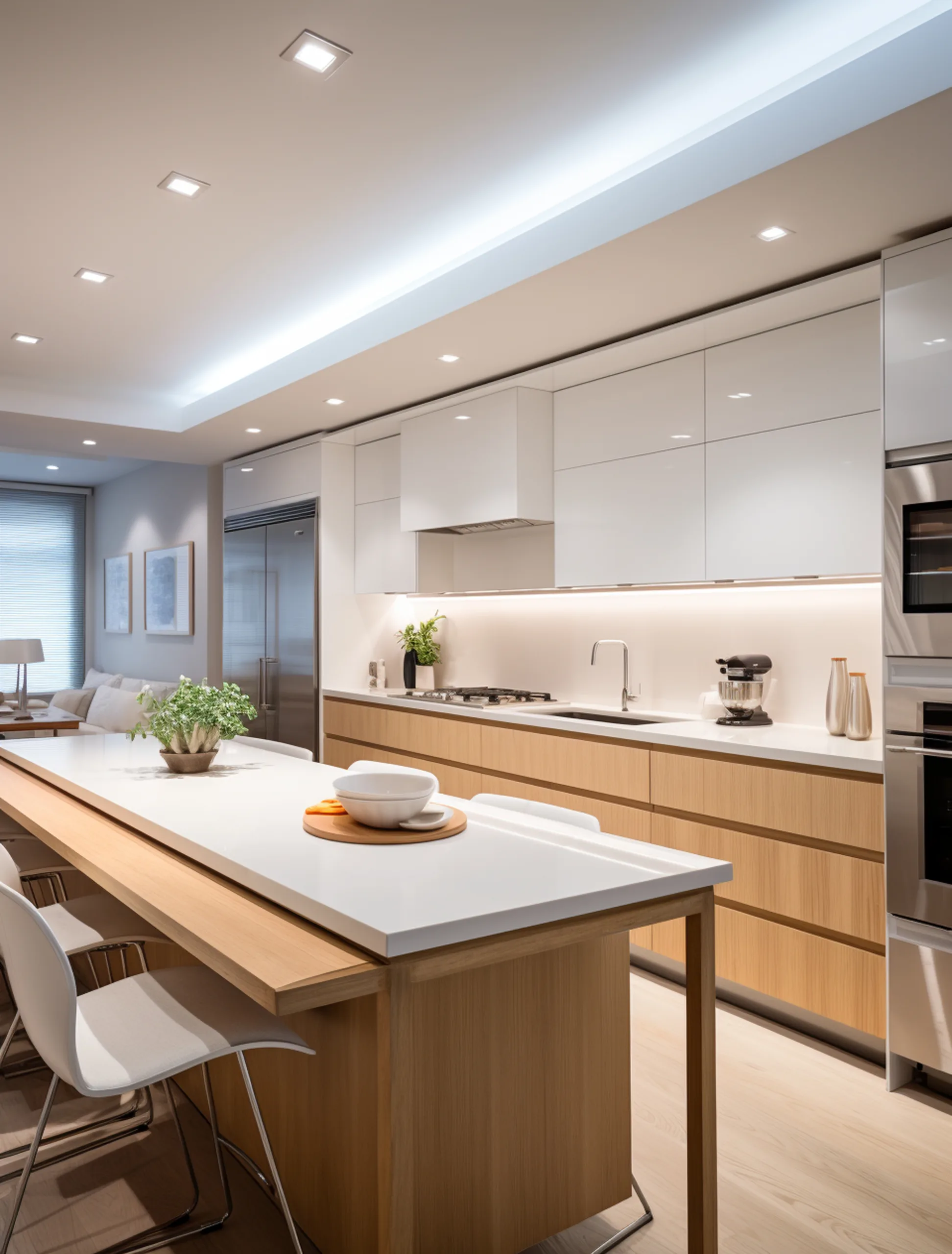
Function vs Aesthetics
Looks matter, but function rules the kitchen. A beautiful kitchen that does not flow will frustrate you daily. Storage, movement, lighting, and access should guide every decision.
Setting a Realistic Kitchen Remodel Budget
How Much Does a Kitchen Remodel Cost?
Costs vary wildly depending on size, location, and finish level. A basic refresh may cost far less than a full structural overhaul. Always plan for a buffer, usually 10 to 20 percent, for surprises.
Where to Spend and Where to Save
Spend on things you touch daily, cabinets, hardware, appliances. Save on decorative lighting or backsplashes that can be upgraded later. Think long-term comfort, not just first impressions.
Planning the Kitchen Layout
Understanding the Kitchen Work Triangle
The classic work triangle connects the sink, stove, and refrigerator. When this triangle is balanced, cooking feels natural and efficient.
Choosing the Right Layout
-
L-shaped kitchens work well for small and medium spaces
-
U-shaped kitchens maximize storage and counter space
-
Galley kitchens are efficient but need smart lighting
-
Open kitchens require careful zoning and ventilation
Your layout should match how you actually live, not how a showroom looks.
Deciding Between Full Remodel or Partial Renovation
When a Full Remodel Makes Sense
If plumbing, wiring, or layout is fundamentally flawed, patchwork fixes will cost more long term. A full remodel resets everything.
When a Partial Upgrade Is Enough
If cabinets are solid and layout works, replacing countertops, appliances, and finishes can dramatically transform the space without demolition chaos.
Designing the Kitchen Style
Choosing a Timeless Design
Trends fade fast in kitchens. Neutral palettes, simple cabinet profiles, and balanced proportions age better than bold statements.
Matching the Kitchen to the Rest of the Home
A kitchen should feel like it belongs to the house, not like it was dropped in from another universe. Consistency creates calm.
Selecting Kitchen Cabinets
Cabinet Types Explained
-
Stock cabinets are affordable and fast
-
Semi-custom cabinets balance flexibility and cost
-
Custom cabinets offer full control but at a premium
Material and Finish Choices
Solid wood, plywood boxes, and durable finishes matter more than glossy showroom lighting. Cabinets are the backbone of your kitchen.
Choosing Countertops That Last
Popular Countertop Materials
-
Quartz for durability and low maintenance
-
Granite for natural variation
-
Solid surface for seamless looks
-
Wood for warmth, with care
Balancing Beauty and Practicality
A stunning countertop that stains or chips easily becomes a regret. Choose materials that match your cooking habits.
Kitchen Appliances Selection
Built-In vs Freestanding Appliances
Built-ins offer a sleek look but limit flexibility. Freestanding appliances are easier to replace and often cost less.
Energy Efficiency Matters
Modern appliances save water and electricity, lowering long-term costs. Efficiency is a design decision too.
Lighting the Kitchen Properly
Layered Lighting Approach
Good kitchens use three layers:
-
Ambient lighting for general brightness
-
Task lighting for work areas
-
Accent lighting for depth and mood
Common Lighting Mistakes
One ceiling light is never enough. Shadows on counters make even the best kitchen frustrating to use.
Plumbing and Electrical Planning
Upgrading Hidden Systems
This is the unglamorous but critical part. Old pipes and wiring should be addressed during a remodel, not ignored.
Planning Outlet Placement
Think about where you actually use appliances. Smart outlet placement prevents clutter and extension cords later.
Flooring for the Kitchen
Best Kitchen Flooring Options
Durability and slip resistance matter more than softness. Porcelain tiles, vinyl planks, and engineered wood are popular choices.
Avoiding Common Flooring Regrets
Glossy floors look great until they become skating rinks. Kitchens need grip and resilience.
Backsplashes and Wall Finishes
Purpose of a Backsplash
It protects walls from moisture and grease, but also anchors the design visually.
Material Choices
Tiles, stone, glass, or even painted panels work when installed correctly. Keep cleaning in mind.
Hiring the Right Professionals
Designer vs Contractor
A designer solves layout and flow. A contractor executes the build. Sometimes one firm does both, sometimes not.
Checking Credentials and References
Always review past work. A beautiful portfolio means little without consistent execution.
Creating a Kitchen Remodel Timeline
Typical Renovation Phases
-
Design and approvals
-
Ordering materials
-
Demolition
-
Rough works
-
Installation
-
Finishing
Managing Delays
Delays happen. Material shortages, inspections, or design changes can slow progress. Flexibility reduces stress.
Living Through a Kitchen Remodel
Setting Up a Temporary Kitchen
Plan a small area with essentials like a kettle, microwave, and mini fridge. It keeps daily life moving.
Mental Preparation
Renovations test patience. Dust, noise, and decisions pile up. Remember, this phase ends.
Final Installation and Quality Checks
Inspecting the Finished Work
Open every cabinet. Test every drawer. Run appliances. Fixing issues now is easier than later.
Punch List Essentials
Create a list of minor fixes before final payment. It protects your investment.
Post-Remodel Maintenance Tips
Caring for New Surfaces
Follow manufacturer care instructions. Simple habits extend the life of finishes dramatically.
Keeping the Kitchen Functional
Regular cleaning, ventilation use, and prompt repairs keep the kitchen feeling new for years.